
Simple Home Organization Ideas That Actually Work
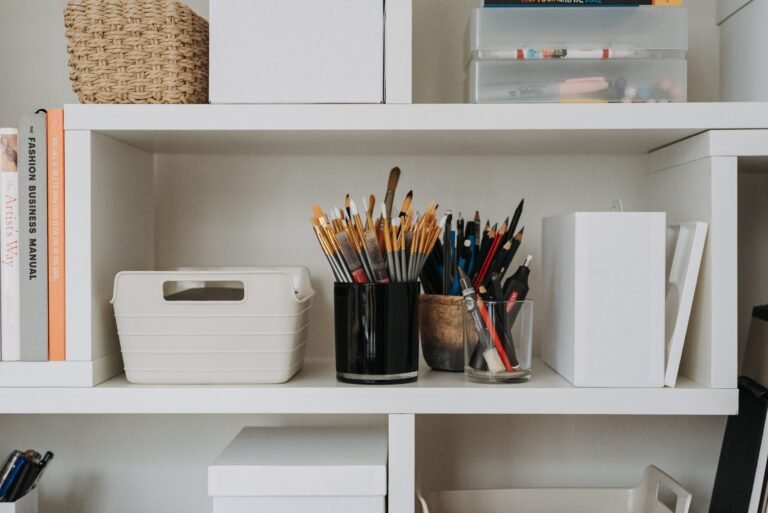
Your home does not need more stuff. It needs a system.
Not a complicated system. Not colour-coded containers and a laminated schedule. A simple, repeatable answer to the question where does this go that stays the same from one day to the next.
What's In This Post
ToggleWhen everything has a home, putting things away takes seconds. When nothing has a home, tidying takes forever and still looks the same an hour later.
That is the entire philosophy. Here is how to make it work.
10 Simple Home Organization Ideas That Actually Work
1. Give Everything a Home
This is the foundation of every other idea on this list.
If something does not have a designated place, it will end up on a counter, a chair, or a floor. Every time. Not because you are disorganised but because without a clear home, the nearest flat surface is the default.
Walk through your home and identify the things that are always somewhere they do not belong. Those things are telling you they do not have a proper home yet. Give them one.
2. Organize the Places That Get Messy First
Do not start with the storage cupboard nobody ever opens.
Start with the spaces that cause daily frustration. The kitchen counter that accumulates everything. The entryway that turns into chaos by Monday morning. The bathroom surfaces. The area at the bottom of the stairs.
Organizing a space that already bothers you produces immediate visible relief. Organizing a space that was fine produces nothing you will notice.
3. Use Baskets for Everyday Clutter
Baskets are one of the most useful and most affordable organization tools available because they contain clutter without requiring everything inside them to be perfectly arranged.
Useful for blankets in the living room. Toys in the playroom or living room. Shoes near the door. Cleaning supplies under the sink. Children’s everyday items.
One important caveat. Do not use baskets as a way to hide things you do not actually need. A basket full of things you never use is clutter with a container. Declutter first, then contain what remains.
Amazon search: Storage baskets for living room, woven baskets home organisation, fabric storage bins bedroom.
4. Keep Frequently Used Things Easy to Reach
The items you use every day should not be at the back of a high shelf behind three things you use once a year.
Your everyday dishes at the front of the cabinet. Your most-used kitchen tools in the first drawer. Your daily skincare products at the front of the bathroom shelf.
Organise your home around your actual routine rather than around what looks neat. A system that works with your habits is one you will maintain. A system that requires your habits to change to accommodate it is one that will slowly stop working.
5. Use Vertical Space
When floor space and surface space are both at their limit, look up.
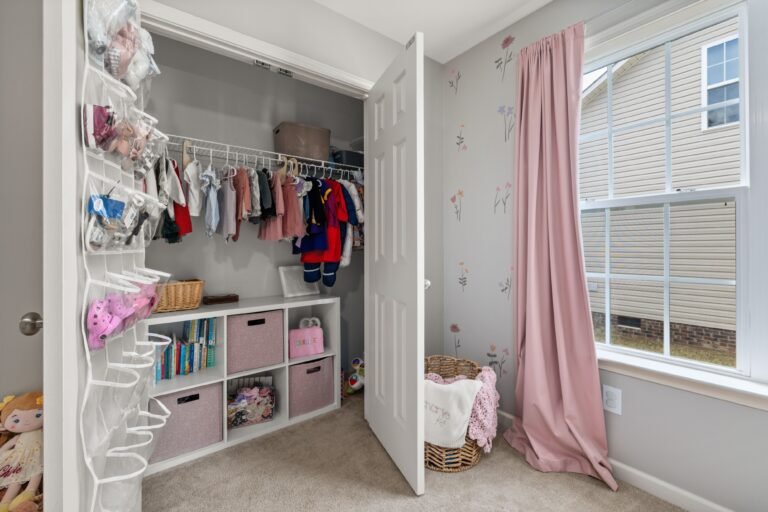
Shelves above the desk. Hooks on the back of the bathroom door. A tall bookcase rather than a low wide one. Wall-mounted storage in the kitchen. An over-door organiser in the children’s room.
Every wall is potential storage that is not taking up floor space. Particularly in smaller homes, vertical organisation changes how much the home can hold without feeling crowded.
Amazon search: Wall mounted shelves floating, over door organiser, hooks for hallway wall.
6. Organize One Room at a Time
Do not pull everything out of the whole house simultaneously.
Choose one room. Finish it. Move on.
The whole-house-at-once approach produces a home that looks more chaotic in the middle than it did before you started, which is demoralising and often results in giving up before anything is actually improved.
One finished room feels like progress. Progress creates motivation. Motivation is what gets the next room done eventually.
7. Create a Home for the Things That Are Always Left Out
Look around your home and notice the things that are consistently in the wrong place.
What is always on the kitchen counter that does not belong there? What is always left at the bottom of the stairs? What is always beside the front door? What lands on the dining table every evening?
These things are sending you a clear message. Their current system is not working. Either they do not have a designated home or the home they have is not convenient enough for anyone to actually use it.
Solve the problem rather than repeatedly putting the item away and finding it in the same wrong place again tomorrow.
8. Keep Surfaces Clear
You do not need empty rooms. You need visible surfaces that are clear enough that the room feels calm rather than crowded.
A surface with three intentional objects feels organised. A surface with fifteen accumulated objects feels chaotic regardless of whether all fifteen things technically belong there.
Fewer things on the visible surfaces. More thought given to what earns the right to be on them.
9. Make It Easy to Put Things Away
If putting something away requires five steps, you will not do it consistently. Especially not at seven in the evening when you are tired and the day has already asked a great deal of you.
The laundry basket that requires opening a cupboard, moving two things aside, and then locating the basket behind them will not be used reliably. The laundry basket that is simply there will be.
Good organisation is designed for the tired version of you, not just the motivated Sunday morning version. If the system requires significant effort to maintain, the system probably needs to change.
10. Do Not Organise More Than You Need To
This one gives you permission.
You do not need matching containers for everything. You do not need a perfectly labelled pantry. You do not need to organise anything that does not currently bother you.
Organise for your life, not for a photograph.
The areas that cause daily frustration deserve organisation. The areas that are working fine do not need a system imposed on them. Spend the energy where it produces real improvement rather than where it produces an impressive result that nobody including you will notice.
How to Organise Your Home When You’re Overwhelmed
When the whole house feels like too much, make the task smaller than it feels.
One room. One surface. One drawer.
In order:
- Throw away anything that is obvious rubbish.
- Remove anything that belongs in a different room.
- Put similar things together.
- Give everything a clear home.
- Stop when the space feels better.
You do not have to organise your entire home in a weekend. One improved space is genuinely better than no improved spaces while waiting for the time and energy to do everything at once.
Simple Organisation Ideas for Busy Moms
Kitchen
Keep the everyday dishes and the most-used cooking tools at the front and within easy reach. The things used every day should not require searching. A drawer or counter organiser for utensils, a consistent place for the everyday mugs, and clear counters where possible.
Bedrooms
A laundry basket that is easy to use. Bedside storage for the things that always end up on the bedside table. A simple place for tomorrow’s clothes if getting dressed in the morning is consistently chaotic.
Entryway
One place for shoes. One hook or area for bags. One home for keys. The entryway that has these three things sorted makes every morning exit and every afternoon return significantly smoother.
Children’s Spaces
Baskets and bins at a height children can reach and return things to without help. The simpler the system, the more likely a child is to use it. A labelled bin with a picture for younger children. Clear expectations about what goes where and when.
Bathroom
Everyday products together and accessible. Less-used products stored away rather than arranged across every available surface. A simple caddy or organiser that keeps the routine items in one place.
Affordable Home Organisation Ideas
Before buying a single storage container, declutter.
You cannot organise clutter. You can only move it. The storage solution purchased for items you do not actually need is wasted money and an additional thing to manage.
Once you know what you are keeping and where it needs to live, these affordable solutions cover most situations.
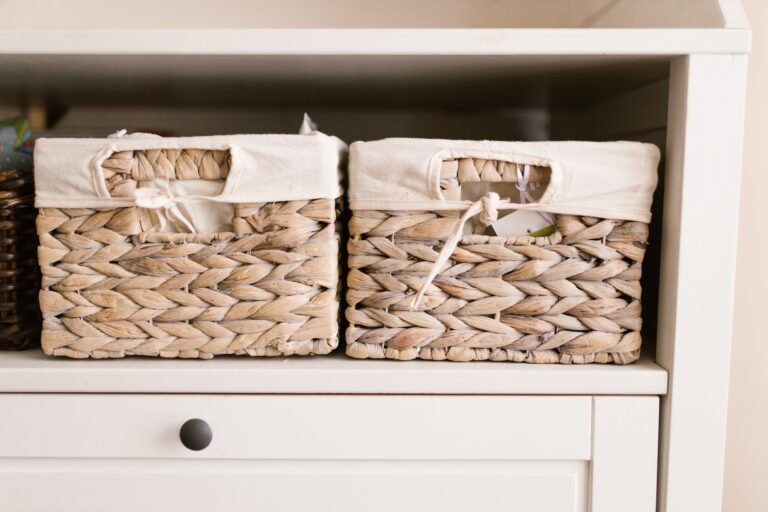
Baskets and bins in various sizes for containing items in rooms where things tend to accumulate.
Hooks for the hallway, the back of doors, and anywhere hanging something is more convenient than finding a shelf for it.
Drawer dividers for the junk drawer, the cutlery drawer, the bathroom drawer, anywhere small items mix into chaos.
Shelf risers that create two levels within one shelf and double the usable storage in a cupboard.
Over-the-door storage for the back of bedroom doors, bathroom doors, and wardrobe doors that are currently unused vertical space.
Amazon search: Drawer dividers kitchen, shelf riser for cupboard, over door shoe organiser, basket set home storage.
None of these require a significant investment. They require knowing what you need to store before you buy them.
The Organisation Rule I Try to Follow
If it is difficult to put away, the system probably needs to change.
Not you. The system.
When things consistently end up in the wrong place, the automatic response is to try harder. The more useful response is to ask whether the current system is actually designed for the way this home works and the way the people in it actually behave.
A home should be organised around how you actually live. Not around how you think you should live or how an organisation blog suggests you should live or how the storage solution was designed to be used.
Design the system for the real behaviour. The system that works with real behaviour is the one that stays working.
Organisation Should Make Life Easier
You are not organising your home so you can spend more time maintaining it.
You are organising it so mornings are less chaotic. So you can find what you need without searching. So the children can help put things away. So the house feels calmer when you walk into a room. So putting things away is easy enough that it actually happens.
The best organisation system is not the most impressive one. It is the one you can still maintain on a Thursday evening when you are tired and dinner still needs to happen.
Simple. Consistent. Designed for your real life.
Start with one space. Give the things in it a proper home. Then move to the next space when you are ready.
That is the whole system.
With love,
Nia
FAQ
What are some simple home organisation ideas?
Give everything a designated home. Organise the spaces that cause the most daily frustration first. Use baskets to contain everyday clutter. Keep frequently used items easy to reach. Use vertical space through shelves and hooks. Keep surfaces clear of everything except intentional items. Make it easy to put things away rather than requiring effort to maintain the system.
How do I organise my home when I am overwhelmed?
Start with one room, one surface, or one drawer. Throw away rubbish, remove things that belong elsewhere, put similar things together, and give everything a home. Stop when the space feels better. You do not need to finish the whole home before the effort is worth making.
How can I organise my home without spending a lot of money?
Declutter before buying anything. The storage solution for things you do not need is wasted money. Once you know what you are keeping, affordable solutions like baskets, hooks, drawer dividers, shelf risers, and over-door storage cover most organisation needs without significant cost.
How do I keep my home organised with kids?
Create systems simple enough for children to participate in. Baskets at accessible heights. Clear expectations about where things belong. An entryway with a consistent home for shoes, bags, and school items. Make putting things away easier than leaving them out.
How do I organise a small home?
Use vertical space through shelving, hooks, and wall-mounted storage. Keep surfaces clear of anything that does not need to be there. Give everything a home so items are not left on surfaces for lack of anywhere to go. Declutter regularly because a smaller space has less tolerance for accumulated items.
What should I organise first?
The spaces that cause you the most daily frustration. The kitchen counter that is always covered. The entryway that is always chaotic. The bathroom that never feels under control. Start where the problem is most felt rather than where the result will look the most impressive.