
Simple Home and Living Ideas for Busy Moms in Their 30s
My home is not perfect.
I want to say that at the beginning because I think the most useful version of this article is the honest one. Not the version where I show you the beautifully styled flat lay and the colour-coordinated storage boxes and the bedroom that looks like nobody actually sleeps in it.
What's In This Post
ToggleThe version where I tell you that I am a single mother building a business from my laptop, raising a sixteen-year-old, healing things from my past, and trying to create a home that feels genuinely good to come home to on a regular Tuesday evening after a day that did not go entirely as planned.
My home has a corner where the ironing lives longer than it should. A kitchen that gets genuinely chaotic by midweek. A desk setup that is functional and not at all aesthetically cohesive. A daughter’s room that I have stopped trying to influence beyond a weekly reminder that the floor is not a storage system.
And within all of that there are things I have learned about how to make a home feel genuinely good, calm, clean enough, comfortable, and mine, without it requiring more time, money, or energy than I actually have.
That is what this article is.
Not home perfection. Home and living for the woman who is building a real life inside a real house while being a real and occasionally tired person.
What Does a Good Home Look Like in Your 30s?
Not what Instagram suggests.
A good home in your thirties, particularly if you are a working mother who is also building something and growing into someone, is not measured by the same standard as the homes that appear in your feed.
It is not necessarily large. It is not necessarily immaculately decorated. It does not require a specific aesthetic or a consistent colour palette or furniture that cost the amount furniture often costs in home decor content.
A good home in your thirties is one that supports your actual life. The specific, particular, complicated, full life you are actually living. Not the life you might live one day or the life that photographs well. The one that is happening right now with the income you currently have and the time you currently have and the children and the work and the goals and the exhaustion and the growth all happening simultaneously.
A home that works for your family
It manages the reality of children without making the children feel like they are damaging something precious every time they exist in it. It has somewhere for the school bag and the sports equipment and the things that children generate in quantities that are difficult to anticipate before you have them.
It accommodates mess as a fact of family life rather than treating mess as evidence of failure.
It functions. The kitchen works when you need to cook quickly on a weeknight. The bathroom works for a family that has a morning routine. The living room is actually lived in.
A home that gives you somewhere to exhale
After the school run and the work and the meetings and the content and the emails and the Blueprint calls and the daughter’s needs and every other thing that the day contains, you need somewhere to come home to that feels like relief rather than another responsibility.
A home that feels calmer than the day you have just had. Not silent or empty. Calmer. A space that does not add to the noise.
This is worth intentionally creating rather than leaving to chance.
A home that reflects the woman you are becoming
This one is specifically HerDailySpace.
As the healing work changes how you understand yourself, the home can change with it. The things you keep. The way you organise your space. The corner you create for the journaling practice. The desk where the Blueprint work happens. The bedroom that is genuinely your space rather than primarily a laundry sorting area.
The home is the physical container of the becoming. It is worth treating it that way.
7 Simple Home and Living Ideas for Busy Moms
1. Make Your Home Smell Fresh
Before anything you can see, smell.
You notice a home’s smell before you notice its décor, its organisation, or even its cleanliness. A home that smells fresh feels clean and calm even when it is not perfectly tidy. A home that does not smell fresh feels uncomfortable regardless of how much effort has gone into its appearance.
The simple version of this does not require expensive candles or diffusers. It requires managing the sources of odour rather than masking them with fragrance.
Air the rooms. Genuinely open windows daily where the weather allows. Fabrics absorb and hold smells in ways that surfaces do not. Curtains, sofa throws, cushion covers, and bedding all benefit from regular washing and from being aired rather than simply being present in a closed room indefinitely.
Kitchen bins are one of the most significant smell sources in most homes and the one most easily addressed. A small bin emptied daily or every other day contributes more to a fresh-smelling kitchen than any candle.
Bathrooms benefit from a quick daily wipe of the surfaces that accumulate moisture and the things that grow in it.
Shoes near the entrance. A box or basket that contains them rather than spreading their specific contribution to the home’s atmosphere throughout the hallway.
Freshness first. Fragrance second. The candle on top of an unaddressed odour source does not solve the underlying issue.
2. Give Your Curtains More Attention
Curtains are one of the highest-impact and most consistently overlooked elements of home appearance.
The wrong curtains, too short, too thin, too narrow for the window, too infrequently washed, make even a well-decorated room feel slightly off. The right curtains make a room feel complete, considered, and larger than it is.
Length matters more than most people realise. Curtains that end at the windowsill look shorter and less elegant than curtains that fall to the floor. Floor-length curtains add visual height to a room regardless of the room’s actual ceiling height.
Width matters. Curtains that only just cover the window when closed look meagre. Curtains with enough fabric to drape and gather slightly on the floor when open look genuinely luxurious in a way that does not require expensive fabric to achieve.
Washing them. This is the one most people leave too long. Curtains accumulate dust and smell in a way that is gradual and therefore easy to stop noticing. Washing them twice a year minimum, and airing them regularly, makes a significant difference to both their appearance and to the smell of the room.
3. Declutter One Small Area at a Time
Not the whole house. Not this weekend.
One drawer this Monday. One cupboard next Saturday. One surface today before the school run.
The whole-house-in-a-weekend approach to decluttering is the version that does not happen for most busy mothers because it requires a block of time and energy that the weekend rarely contains in the quantities required. The smaller version is the one that actually gets done.
One small area changed is more useful than the perfect whole-house clear-out that does not happen.
The additional benefit of the small-area approach is that the area stays clear. When you have spent twenty minutes on one drawer you are more likely to maintain it than when you have spent an exhausted weekend on the whole house and do not have the energy to think about maintenance.
Small wins. Sustained over time. More effective than the dramatic reset that requires repeating from scratch six months later.
4. Create a Home Reset Routine
Not a cleaning schedule. A reset.
The distinction matters. Cleaning happens less frequently and involves more effort. Resetting happens daily and takes fifteen to twenty minutes at most. The reset keeps the home from accumulating the kind of disorder that then requires the significant cleaning session to address.
Morning reset:
Make the beds. This single action changes the appearance of every bedroom immediately and sets a visual tone for the day that affects how the rest of the home feels.
Open curtains and where possible windows. Light and air are free and they change the feel of a home immediately.
Clear the kitchen surfaces of the previous evening’s final accumulation.
Evening reset:
Kitchen. Dishes done or in the dishwasher. Surfaces wiped. Bin checked.
Living room. Things returned to where they belong. Cushions straightened. Whatever was out during the day put away.
Bathroom. A quick surface wipe. Fresh towel on the rail where needed.
Set up tomorrow. Bags ready. School things in order. Whatever makes tomorrow’s morning start five minutes faster than today’s.
The goal of the evening reset is not a spotless house. It is a home that is easier to function in tomorrow morning than it would have been if you had simply gone to bed in the middle of the evening’s entropy.
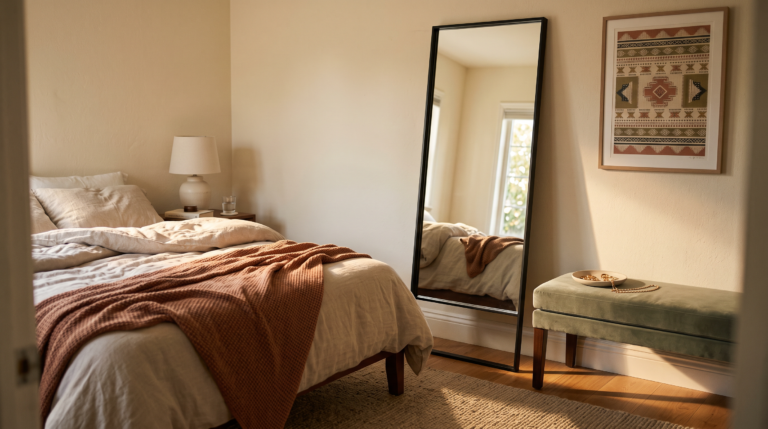
5. Make Your Bedroom Feel Like Your Space Too
This is the home and living idea I want to say most directly to the single mothers and working mothers and mothers-who-are-also-building-things reading this.
Your bedroom is allowed to be yours.
Not primarily a laundry sorting area. Not primarily a place where things go that do not have an obvious home elsewhere. Not primarily the space the children wander into at 6am and claim for an hour before school.
Yours. A space that feels like the woman who lives in it rather than like the overflow of everyone else’s needs.
This does not require a renovation. It requires a few intentional decisions.
Clean bedding changed regularly. This is the single highest-impact thing you can do for a bedroom. Fresh bedding on a made bed changes the entire energy of a room.
Fewer things on the surfaces. Not minimal in an aspirational way. Just less. The bedside table that has the book you are currently reading, the lamp, and the glass of water rather than the bedside table that has accumulated six months of miscellaneous items that arrived there for reasons you no longer remember.
Soft lighting in the evening. Overhead lighting in a bedroom at night creates the wrong atmosphere for sleep and rest. A lamp creates a different quality of light that makes the room feel genuinely restful.
A scent you associate with calm. A candle, a room spray, clean sheets, a diffuser. Something that signals to your nervous system that this space is for rest.
One thing that is purely and specifically yours. Not functional. Not for the children. Something beautiful or meaningful that belongs in the room because you chose it for yourself.
6. Make Your Home Look More Expensive Without Spending Much
The things that make a home look expensive are almost never the expensive things themselves. They are the visual cues of intention and order that expensive homes tend to have because someone was paid to create them deliberately.
You can create them yourself.
Matching hangers in the wardrobe. This single change in a room that nobody else sees produces a visual calm that affects how you feel getting dressed every morning.
Decluttered surfaces. A styled surface with three intentional objects looks more expensive than the same surface covered in fifteen objects that arrived there gradually.
Curtains hung from ceiling height even when the window does not reach the ceiling. The curtain track or pole positioned at ceiling height and the curtains falling to the floor creates the impression of a much taller room.
Cohesive colours. You do not need everything to match. You need things to coexist without visual conflict. A throw, cushions, and a rug that are from the same colour family rather than three different unrelated palettes.
Better lighting. Lamps instead of or in addition to overhead lighting in living spaces. The quality of light in a room is one of the most significant contributors to how the room feels and costs very little to change.
Fresh towels displayed rather than stored. Rolled or folded neatly. A small detail that signals care.
One genuinely good thing per room rather than many average things. One beautiful print. One quality throw. One lamp that is actually attractive. The eye is drawn to the good thing and uses it to inform its assessment of everything around it.
7. Create a Small Work From Home Space
For the HerDailySpace reader who is blogging, freelancing, running a Blueprint-based coaching business, or building any kind of online income from home, this section is specifically for you.
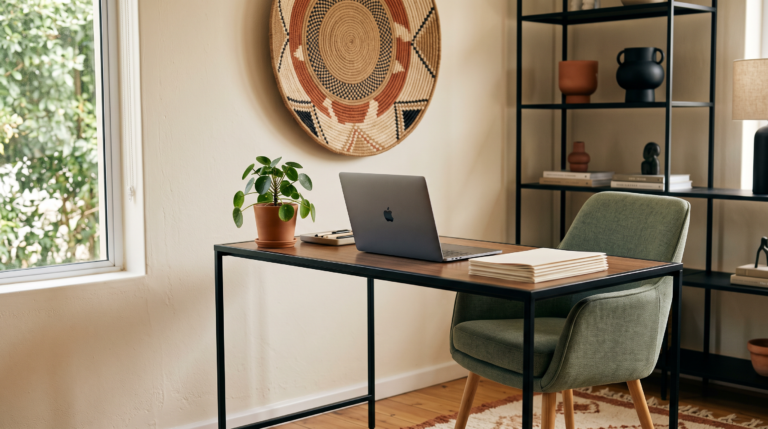
You do not need an entire office. You need a designated area that is specifically and consistently the work area. A corner. A desk in the bedroom. A specific seat at the dining table that is yours for work hours. Any defined space that your mind associates with work mode.
The psychological value of having work contained in a specific area rather than spreading across the home is significant. It makes it easier to start work when you sit down in that area. It makes it easier to stop work when you leave it. It reduces the specific exhaustion of a home that has become entirely your office.
What the space needs:
Good lighting. Natural light where possible. A quality lamp where not.
A surface at the right height for your working posture. Back pain from working from a laptop on a sofa accumulates faster than you expect.
Storage for work things. The things that live in the work area should stay in the work area. Documents, equipment, notebooks, chargers. Contained rather than spreading.
Something that makes the space pleasant to be in. A plant. A good candle. Something that makes the area feel like somewhere you actually want to spend time.
What the space does not need:
Everything else. The work area that becomes a dumping ground for things that have no other home stops functioning as a work area and starts functioning as a source of visual and cognitive clutter.
How to Keep Your Home Organised When You Are Also Building Something
This is the section for the reader who is trying to run a home and build a career or a business simultaneously. Which, for much of the HerDailySpace audience, is the specific situation.
Organise for the life you actually have
Not for the life where you have more time. Not for the imagined version of your week where the schedule works out the way you planned it on Sunday.
The organisation system that works for a woman building a business from home while raising a child is not the system that works for someone who is home all day with no work commitments. Accept this and build a system for your actual life rather than spending energy maintaining one designed for someone else’s.
Give everything a home
The things that perpetually get moved around the house rather than having a fixed place are the things that create the most visual noise and the most time spent managing them.
The chargers. The school permission slips. The keys. The bag that goes everywhere. The shoes that end up in three rooms.
Each of these needs a specific home that everyone in the household knows about and returns things to. The system does not need to be elaborate. It needs to be clear.
Make things easy to put away
If putting something away requires five steps, it will not be put away consistently. It will be put down somewhere between steps two and three and that will become its new home.
Storage that requires effort to use will not be used regularly. Storage that is in the right place, the right size, and requires one movement to access will be used by everyone in the household without reminders.
Design the storage around the actual behaviour rather than expecting the behaviour to change to accommodate the storage.
Create systems rather than relying on motivation
Motivation is variable. Systems are constant.
The morning routine that happens regardless of how motivated you feel about it that morning produces a tidier home than the cleaning motivation that arrives occasionally and produces a burst of activity followed by a return to the previous state.
Small consistent systems sustained over time. The daily reset. The weekly tidy. The monthly declutter of one specific area. These produce a home that functions without requiring ongoing motivation to maintain.
Affordable Ways to Make Your Home Feel Better
Change the textiles first
Curtains, bedding, cushions, and towels are the highest-impact, most affordable changes available in most homes. They cover the most visual space and they communicate warmth, care, and intention in a way that feels immediate.
New bedding on the same bed makes the bedroom feel different from the previous night. Fresh towels on the same towel rail change the bathroom. New cushion covers on the same sofa update the living room.
Textiles are the budget-conscious interior refresh.
Improve the lighting
Overhead lighting is functional and rarely beautiful. A lamp produces a quality of light that changes the atmosphere of a room in a way that no amount of decorating can replicate.
If a room feels cold, harsh, or uncomfortable and you cannot identify why, look at the lighting before anything else.
Remove things before buying things
The room that feels cramped and overwhelming often does not need more things added to it. It needs things removed.
Before any purchase, consider whether the room would feel better with fewer things in it. The answer is frequently yes and the solution is free.
Rearrange what you already own
Moving furniture changes a room. Styling a shelf differently changes it. Grouping objects intentionally rather than leaving them where they ended up creates visual order from the same objects.
This costs nothing and sometimes produces a more significant change than purchasing something new.
Choose fewer things you genuinely love
Rather than filling a home with many average things accumulated gradually, choosing deliberately and slowly and keeping only what genuinely contributes to the home produces a space that feels significantly more considered on a much smaller budget.
This is not minimalism as an aesthetic. It is intentionality as a practical approach to creating a home that feels genuinely good without requiring ongoing expenditure.
Simple Home Ideas for Moms Who Do Not Have Much Time
The fifteen-minute reset:
Five minutes on the kitchen. Dishes managed. Surfaces wiped. Bin checked if needed.
Five minutes on the living room. Visible clutter returned to where it belongs. Cushions straightened.
Five minutes on the bathroom and bedroom. Quick surface wipe. Towel on the rail. Bed made if not already done.
That is it.
You do not have to clean your entire home every day to feel like your home is under control. You need to prevent the accumulation of small disorder that compounds into large disorder. Fifteen minutes of daily reset does this more effectively than an occasional intensive session that addresses the consequences of two weeks of accumulated entropy.
How to Make Your Home Feel Calmer
Reduce the visual clutter. Every surface covered in objects competes for visual attention simultaneously. Fewer things on each surface reduce the cognitive load of being in the room.
Create at least one quiet space. In a home with children and work and everything else, one area that is consistently calm and clear provides somewhere to go when the rest of the house is operating at full volume.
Soft lighting in the evenings. The shift from overhead lighting to lamp lighting in the evening signals the transition from the active part of the day to the rest part in a way that the nervous system responds to.
Fresh air. Open windows where possible. The smell of fresh air in a room is the most immediate and most free way to make it feel different.
Clean surfaces. A surface that is clear of everything except what is meant to be on it produces a quality of visual calm that is disproportionate to the effort it requires to maintain.
Calming colours. Not a specific palette mandated by any design trend. Colours that produce calm in you specifically. The wall colour and the textile colours that when you look at them make you feel settled rather than stimulated.
Fewer things overall. The most calming homes I have been in are the ones where there is enough space around objects that each one can breathe. Not empty. Considered.
And then the version of this that is most specifically HerDailySpace.
Sometimes creating a calmer home is also about creating a calmer life. The home that feels overwhelming and chaotic often reflects something about the internal state of the person living in it. The decluttering that starts with a drawer and ends with a decision. The reset that starts with the kitchen and ends with a clearer sense of what the day actually contains.
The home is not separate from the becoming. It is part of it.
Things You Do Not Need to Do to Have a Good Home
Because the most useful thing I can offer the busy mother in her thirties is sometimes permission.
You do not need to deep clean every day. You need to reset daily and clean regularly. These are different things that require different amounts of time and energy.
You do not need expensive furniture. You need furniture that functions, that fits the space, and that you are comfortable in. The expensive version of these qualities is not the only version.
You do not need to follow every decor trend. The home that reflects who you actually are is more comfortable to live in than the home that reflects what was trending in a particular year.
You do not need to have a perfectly organised children’s room. You need a children’s room with enough system that things can be found and stored without significant effort. Perfect is a standard that children’s rooms do not maintain regardless of the effort invested.
You do not need to keep your home spotless when you have children. You need to keep it clean enough and manageable enough that the mess does not become the dominant characteristic. A home that is lived in by children looks like it is lived in by children. This is appropriate and normal.
You do not need to spend your entire weekend cleaning. You need systems that distribute the maintenance across the week in manageable daily increments. The weekend should include some rest. A mother who spends her entire weekend cleaning and then starts Monday already depleted is not maintaining a sustainable approach to home management.
Your home is allowed to look lived in
This is perhaps the most important permission in this entire article.
A home that looks genuinely lived in, where the books are read and the cushions are slightly imperfect and the kitchen shows evidence of actual cooking and the children’s things have a presence in the spaces they inhabit, is not a failing home.
It is a home where real life is happening. And real life happening in a home is precisely the point of having one.
My Simple Home Philosophy
I want a home that is clean enough to feel good. Beautiful enough to enjoy being in. Organised enough that I can function without spending significant energy locating things or navigating chaos. And lived-in enough to feel like home rather than like a space I am afraid to disturb.
That is the standard I am working to. Not perfection. Not Instagram. Not the home that requires resources or time I do not currently have.
A home that supports the woman who lives in it. The mother. The businesswoman. The healer. The traveler when she is between trips. The journaler who needs somewhere quiet to write. The woman who is still becoming and who needs a physical space that holds that process without adding to the noise.
That is the home I am building. Slowly. Imperfectly. Consistently.
A Simple Home Reset You Can Start Today
30-minute version:
10 minutes: Clear visible clutter from main living areas. Return things to where they belong. Remove everything that does not belong from the surfaces that accumulate things.
5 minutes: Kitchen. Dishes managed. Surfaces wiped. Bin checked.
5 minutes: Bathroom. Surfaces wiped. Fresh towel on the rail. Floor cleared of anything that has accumulated there.
5 minutes: Bedroom. Bed made or straightened. Surfaces cleared of the things that have accumulated. Laundry either put away or contained rather than draped.
5 minutes: Open windows in at least two rooms. Put on something that makes the home smell good. Stand in the middle of the room that has benefited most from the previous twenty-five minutes and notice the difference.
Do not try to reset your entire home today if your home needs more than thirty minutes of attention. Choose one room and make it feel better. The one room is real progress. The whole house left unfinished because the task was too large is not.
Your Home Should Support the Life You Are Building
You are not just keeping a house.
You are raising a child who is watching how you live. You are building a business or a career from this space. You are healing things that needed time and attention and somewhere quiet to be processed. You are setting intentions for a life that looks genuinely different from the one you were living before you started becoming who you are.
Your home is where all of that happens.
It does not need to be perfect to support it. It needs to be good enough. Functional enough. Calm enough. Yours enough.
The standard is not the magazine. The standard is: does this home make the life I am building easier to live. Does it support the woman I am becoming. Does it give me somewhere to exhale at the end of a day that required a great deal of me.
If the answer is yes even on the messy Wednesdays and the chaotic half-terms and the days when the laundry has not been done and the kitchen looks like the budget weekly shop happened inside it, then the home is doing its job.
With love,
Nia
leo.
FAQ
What are some simple home and living ideas for busy moms?
The highest-impact simple home ideas for busy mothers are a daily reset routine rather than sporadic intensive cleaning, prioritising scent by addressing the sources of odour rather than masking them, making your bedroom genuinely your space with clean bedding and fewer things on surfaces, decluttering one small area at a time rather than attempting the whole house at once, and creating a designated work space if you are working or building something from home.
How can I make my home look better without spending much money?
The changes that produce the most visible improvement for the least cost are removing things rather than adding them, changing the textiles, particularly bedding, curtains, and cushion covers, improving the lighting by adding lamps rather than relying on overhead lighting, hanging curtains from ceiling height rather than from the top of the window frame, and choosing cohesive colours across the textiles in a room.
How can busy moms keep their homes organised?
Build systems rather than relying on motivation. Give everything a fixed home that everyone in the household knows about. Make things easy to put away by ensuring storage is accessible and appropriately placed. Organise for the life you actually have rather than an idealised version of it. And use a daily reset rather than trying to maintain perfection continuously.
How can I make my house feel cosy?
Soft lighting through lamps rather than overhead lights. Textiles including throws, cushions, and rugs that add warmth and texture. A scent you associate with comfort. Fewer things on surfaces so the objects that are present can be appreciated. Clean bedding in the bedroom. These changes together produce a quality of warmth that expensive furniture cannot create without them.
How can I keep my house clean when I am busy?
A daily reset of fifteen to twenty minutes is more effective for a busy household than occasional intensive cleaning sessions. The reset prevents the accumulation of disorder rather than addressing its consequences. Kitchen, living room, bathroom, and bedroom surfaces managed briefly each day keeps the home from reaching the state that then requires significant time to address.
How can I make my home smell fresh?
Open windows daily where possible. Wash fabrics regularly including curtains, cushion covers, sofa throws, and bedding. Keep kitchen bins emptied and clean. Address bathroom surfaces daily. Keep shoes contained near the entrance. Freshness comes primarily from removing the sources of odour rather than from adding fragrance on top of them.
How can I organise my home when I work from home?
Create a designated work area and keep work things contained within it. Establish clear start and finish times for work and use the physical action of leaving the work area as the signal for the end of work. Store work equipment and documents in the work area rather than allowing them to spread through the home. Keep the workspace visually separate from the living spaces where possible.
How can I make a small home feel bigger?
Floor-length curtains hung from ceiling height create visual height. Fewer things on surfaces reduce visual crowding. Good lighting, particularly natural light, opens up a space. Mirrors positioned to reflect light and space increase the sense of roominess. Cohesive colours reduce the visual noise that makes a small space feel smaller. And removing things consistently prevents the accumulation of objects that compress the available space further.
How can I make my home look expensive on a budget?
Matching hangers in wardrobes. Surfaces with fewer and more intentional objects. Floor-length curtains. Cohesive colour palettes across textiles. Better lighting through lamps. Fresh towels displayed. One genuinely attractive thing per room rather than many average things. These changes communicate intention and care in ways that expensive furniture alone does not.
How do you keep a home organised with children?
Accept that children generate mess as a normal part of their existence and organise around that reality rather than fighting it. Give children’s things specific homes that are easy to access and easy to return to. Make storage child-height where appropriate. Involve children in the reset routine from an age-appropriate point. And distinguish between organised and spotless, aiming for the former while releasing the expectation of the latter.