
How to Declutter Your Home in a Few Simple Steps
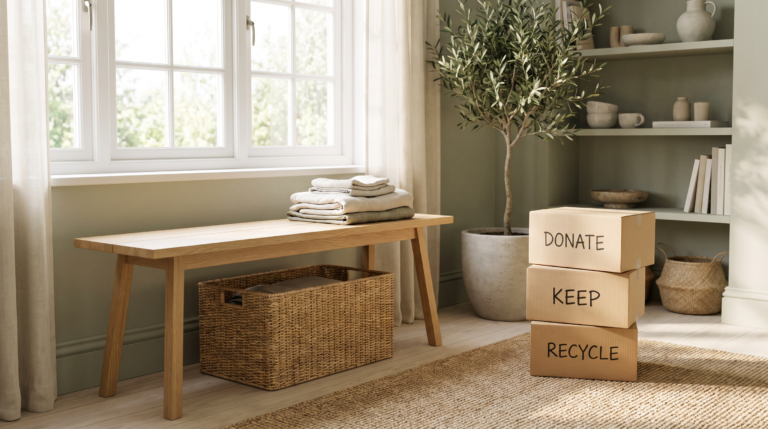
Sometimes the hardest part of decluttering is not knowing what to throw away.
It is looking around your home and having absolutely no idea where to start.
What's In This Post
ToggleYou do not need an entire weekend. You do not need twenty storage containers. You do not need to get rid of everything you own or transform your home into a minimalist showroom.
You just need a starting point.
This is it.
How to Declutter Your Home in 7 Simple Steps
1. Start With One Small Area
Not the kitchen. Not the whole bedroom. Not the house.
One drawer. One shelf. One bathroom counter. One corner. One cupboard.
Choose the smallest possible area and commit to finishing it before moving anywhere else. The satisfaction of one completely finished space is worth more than three half-finished rooms that still feel overwhelming.
2. Take Everything Out
Remove everything from the space completely before you make any decisions.
You cannot properly assess what you have while it is still arranged the way it was. Take it all out. Put it somewhere visible. Now look at what is actually there.
You will almost always find things you forgot you had, things you have duplicates of, and things you cannot explain the presence of. That is normal. That is the point.
3. Create 4 Simple Piles
Keep. You use it. You want it. It belongs in this space.
Donate. Someone else could use this. It is in good condition and it has a life beyond your home.
Throw away. Broken, damaged, expired, or genuinely useless. Out.
Put somewhere else. It belongs in a different room. Deal with it after you finish this space.
That is the entire sorting system. Four piles. No complicated categories. No lengthy deliberation about which decluttering method you are following.
4. Ask Yourself These 3 Questions
For anything you are struggling to let go of:
Do I actually use this?
Would I buy this again today if I saw it in a shop?
Does it deserve the space it is taking up?
If the answer to all three is no, you have your answer.
You do not have to follow the answer immediately if the item has sentimental value. But the three questions will tell you what you already know.
5. Put the Keep Items Back Properly
Now you organise. Not before.
This is important. Organising comes after decluttering, not instead of it. There is no point creating a beautiful storage system for things you do not need.
Once you know what is staying, put it back thoughtfully. Everything with a clear place. Everything accessible. Everything that belongs there and nothing that does not.
6. Get the Donations Out of the House
Do not create a new pile of clutter called things I am going to donate.
Put them in a bag or box. Put the bag or box by the front door or in the car. Get them out of the house as soon as you reasonably can.
The donate pile that sits in the corner for three weeks is not a donation. It is clutter with better intentions.
7. Stop When the Space Feels Better
You do not need to finish the whole house.
One drawer that is no longer overflowing is progress. One clear countertop is progress. One organised cupboard is progress.
Stop there. Come back tomorrow or next week. The house did not become cluttered in a single afternoon and it does not need to be decluttered in one either.
How to Declutter When You're Overwhelmed
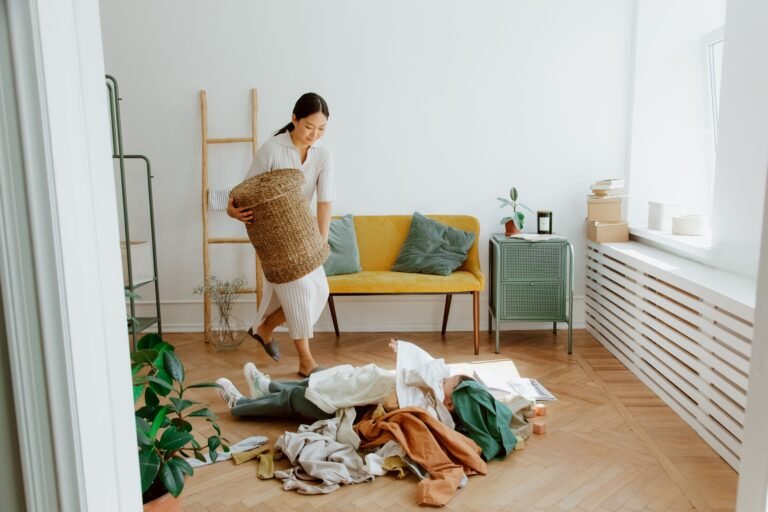
If the whole house feels like too much, do not start with the messiest room.
Start with the easiest win.
Set a timer for 10 minutes.
Grab a rubbish bag. Remove obvious rubbish only. Put away anything that already has a home. Choose one small visible surface. Stop when the timer goes.
Do not extend the time. Stop when the timer ends. Tomorrow do another ten minutes.
The overwhelm is telling you the task feels too large. Make it smaller. Smaller than you think it needs to be. The ten-minute session that actually happens is worth more than the whole-house clear-out that never starts.
What If I Want to Keep Everything?
You do not have to be ruthless.
For anything that is genuinely difficult to let go of, ask these questions instead.
Would I miss this if it were gone?
Am I keeping it because I love it or because I feel guilty letting it go?
Do I have space for it without it crowding out things I actually use?
Could someone else genuinely benefit from having this?
Sentimental items deserve to stay. Objects you feel guilty about but do not love or use do not.
Decluttering is not about owning as little as possible. It is about making room for the life you are actually living. The things that support that life deserve to be there. The things that simply occupy space without contributing to it do not.
The Easiest Places to Start Decluttering
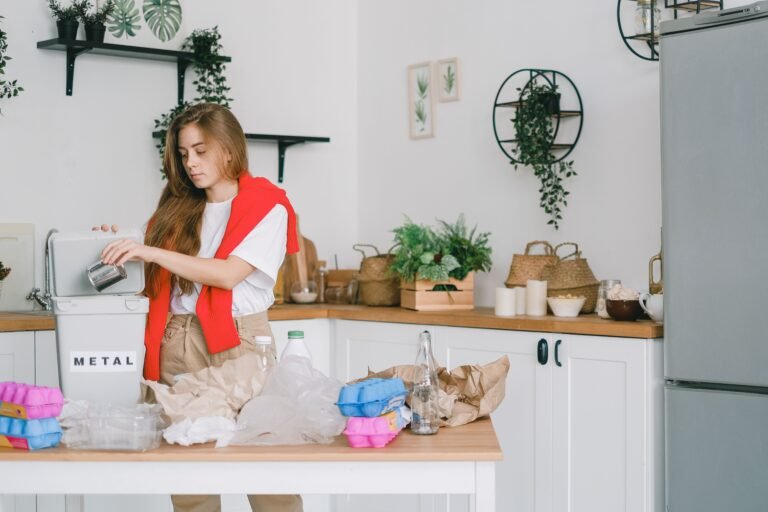
If you are not sure where to begin, start with a visible space. The result feels immediate and the motivation to continue is easier to find.
- Kitchen counters
- The junk drawer
- Bathroom cabinet
- Bedside table
- Wardrobe
- Children’s toys
- Pantry or food cupboard
- Fridge
- Entryway and shoe area
- Paperwork pile
Choose the one that bothers you most when you look at it. That is where to start.
A Simple Decluttering Checklist
Screenshot this. Come back to it every time you tackle a new area.
☐ Choose one small area
☐ Remove everything from it
☐ Throw away anything broken, expired, or useless
☐ Create a donate pile for good condition items you do not need
☐ Put misplaced items in a separate pile to return to their proper room
☐ Keep only what you use, need, or genuinely love
☐ Clean the empty space before putting anything back
☐ Return the keep items with intention
☐ Remove donations from the house as soon as possible
One small area at a time. One checklist at a time.
You Do Not Need to Declutter Everything
Your home is allowed to look lived in.
You are raising children. You are working. You are building a life and healing through things and managing more than most people realise from the outside. The house reflects that. Of course it does.
You do not need an empty house. You do not need a minimalist aesthetic that requires maintaining perfection while real life is happening in the rooms.
You just want less stuff competing for your attention. Less visual noise. More breathing room. More surfaces where you can put something down without it landing in a pile.
Start with one drawer. Then one shelf. Then one room when you are ready.
You do not have to do it all today. And you definitely do not have to do it alone.
With love,
Nia
FAQ
How do I start decluttering my home?
Start smaller than you think you need to. Choose one drawer or one shelf rather than a whole room. Take everything out, sort into keep, donate, and throw away piles, and put only the keep items back. Finish one small area completely before moving to the next.
How can I declutter my home quickly?
Focus on visible surfaces first because the result is immediate and motivating. Remove everything, sort quickly, get rid of anything obvious, and put only what belongs there back. For a faster session, focus only on rubbish and obvious donations rather than making detailed decisions about every item.
How do I declutter when I am overwhelmed?
Set a timer for ten minutes and start with rubbish only. Remove everything that is clearly rubbish from the most visible area. Stop when the timer ends. Tomorrow do another ten minutes. Breaking it into small timed sessions makes it manageable when the whole task feels impossible.
How do I declutter if I want to keep everything?
Ask three questions for anything difficult to release. Would you miss it if it were gone? Are you keeping it because you love it or because of guilt? Does it have enough space without crowding things you actually use? You do not have to be ruthless. Focus on releasing what is taking up space without genuinely contributing to your life.
How can I declutter my house in one day?
Work room by room with a strict timer. Start with the most visible and most used spaces first. Do not get distracted by sentimental areas. Keep the four-pile system simple. Have bags and boxes ready so donations can leave immediately. Accept that one day may not cover everything and finish what you can rather than aiming for perfection.
What should I get rid of when decluttering?
Anything broken or damaged beyond use. Anything expired. Duplicates where one version is sufficient. Clothes that have not been worn in over a year. Items kept from guilt rather than genuine use or love. Things that do not have a clear home and therefore perpetually create clutter. Anything that someone else could use more than you currently are.