
How to Make a Small Room Look Bigger: 15 Easy Decorating Tricks
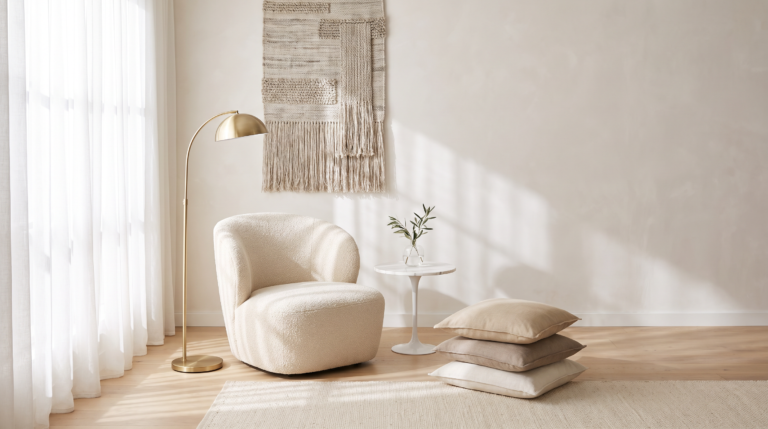
You walk into the room and something immediately feels off.
The furniture is not enormous. The room is not dramatically tiny. But everything feels slightly too close together. The walls feel like they are doing something. The space feels full before you have even put anything in it.
What's In This Post
ToggleMost of us are not going to knock down a wall or move into a larger home simply because a room feels smaller than we would like it to. We have children and work and the cost of living and an actual life that does not leave much budget or bandwidth for architectural solutions.
What we can do is change what the eye sees.
A room does not have to be bigger to feel bigger. It has to be seen differently. And the difference between a room that feels spacious and one that feels cramped is almost never the actual square footage. It is the way light moves through it, the proportion of the furniture within it, the amount of visual information competing for attention, and the specific decisions that were made about colour and curtains and clutter.
This is everything I know about making those decisions well.
How to Visually Enlarge a Small Room
Before the specific tricks, the underlying principles. Because understanding why something works makes it easier to apply in your specific room rather than following a rule that does not quite fit.
1. Let in as much natural light as possible
Natural light is the most powerful tool available for making a room feel larger and it costs nothing to use.
Keep windows unobstructed. Furniture placed directly in front of a window blocks the light before it can reach the rest of the room. The sofa, the wardrobe, the shelving unit, whatever is placed against or near a window should not be tall enough to interrupt the light coming through it.
Use lightweight curtains or sheers during the day. Heavy curtains closed or partially closed during daylight hours absorb the light that makes the room feel open. Lightweight curtains in a pale colour allow more light through even when they are partially drawn.
Open the curtains as wide as they will go during the day. The more window visible, the more light enters, and the more open the room feels.
2. Use mirrors strategically
A mirror creates the visual impression of additional space because it reflects the room back, effectively doubling the depth the eye perceives in that direction.
The placement matters more than the mirror itself.
A mirror positioned opposite a window reflects the natural light and the view outside, making the room feel as though it extends beyond the wall the mirror is on. This is the most effective mirror placement for a small room.
One large mirror is more effective than several small mirrors. Multiple small mirrors create a fragmented effect. One large mirror creates a genuine impression of space.
Position the mirror so it reflects something worth reflecting. The light from the window. A well-styled area of the room. Not the back of a door or a blank wall.
Amazon search: Large wall mirror for small bedroom, full length mirror leaning, gold framed large mirror.
3. Keep the floor as visible as possible
The more floor is visible in a room the larger the room appears. This is one of the most counterintuitive principles in small room decorating and one of the most consistently effective.
Furniture with visible legs, sofas, chairs, beds, and side tables raised on legs rather than sitting flush with the floor, reveal more floor beneath them and create the impression of more open space.
Floating shelves rather than freestanding bookcases allow the floor beneath them to remain visible. A floating bedside table rather than a solid one achieves the same effect.
Avoid bulky upholstered bases on beds that sit flush with the floor. A bed with legs, even short ones, feels lighter in a room than one without.
4. Do not push every piece of furniture against the wall
This is the most counterintuitive advice in small room decorating and the one most people do not follow because pulling furniture away from the wall feels like it is taking up more space.
It often creates the impression of more space rather than less.
Furniture pulled slightly away from the wall creates depth behind it that the eye reads as additional space. It also creates a more intentional, designed layout rather than a functional arrangement where everything is simply pushed to the perimeter.
Try pulling the sofa six to twelve inches away from the wall it is currently against. Notice whether the room feels more considered and more spacious as a result.
15 Easy Ways to Make a Small Room Look Bigger
1. Choose light, airy colours
Light colours reflect more light back into the room. More light in the room creates the impression of more space. This is the most established principle in small room decorating and it is consistent because it works.
Soft white, warm cream, pale linen, light greige, and soft pale tones all make a room feel more open. They are not interchangeable with each other in terms of warmth and character, but they share the quality of reflecting rather than absorbing the light in the room.
2. Use one main colour throughout
A room where the walls, the woodwork, the ceiling, and the large furniture pieces are all in the same or very similar colours reads as a single cohesive space rather than a series of competing surfaces. This visual continuity makes the room feel larger because the eye is not interrupted repeatedly by different planes and different colours.
Painting the skirting boards and door frames in the same tone as the walls is one of the most effective and most affordable ways to make a small room feel more spacious. The walls, the floor trim, and the ceiling in the same tone creates a room that reads as an envelope rather than a collection of separate elements.
3. Hang curtains higher than the window
This is one of the changes with the highest visual impact relative to the cost.
When a curtain pole is positioned at the top of the window frame, the curtain draws the eye to the window and no further. When the pole is positioned at ceiling height, the curtain draws the eye all the way up to the ceiling, creating the impression of a significantly taller room.
The floor-length curtain hung from a ceiling-height pole makes a room with a standard ceiling feel like it has a taller ceiling. It makes the window feel larger than it is. And it makes the room feel more generous and more expensive simultaneously.
This change requires a new pole position and longer curtains. In terms of visual impact per pound or rand spent, it is one of the best investments in a small room.
Amazon search: Ceiling track curtain rod, long curtain pole extendable, neutral curtain panel long.
4. Choose curtains that match the walls
A curtain in a strong contrasting colour to the wall it is against creates a visual break that interrupts the continuity of the wall and makes the room feel smaller.
A curtain in the same colour family as the wall, or in a neutral that relates closely to the wall colour, allows the curtain to blend with the wall rather than stand out from it. The window becomes part of the wall rather than a separate element, and the room reads as larger and more cohesive as a result.
5. Use a large mirror
Already covered in the visual principles above but worth repeating in the practical list because it is one of the single most effective changes available.
One large mirror. Positioned to reflect light or a good view of the room. In a frame that contributes to the room’s aesthetic rather than competing with it.
6. Keep furniture proportional
Small room does not mean small furniture. It means proportionally appropriate furniture.
A room filled with many small pieces of furniture does not necessarily look larger than a room with fewer, appropriately sized pieces. The many small pieces create visual busyness that makes the room feel cluttered rather than spacious.
Choose fewer pieces of furniture that are the right scale for the room rather than many small pieces that create visual noise.
7. Choose furniture with visible legs
Already covered but worth repeating as a practical action. Check whether any furniture in the small room can be replaced with or swapped for a version with visible legs. The visual effect of revealed floor is significant.
Amazon search: Sofa with wooden legs small, bed frame with legs small room, side table with legs narrow.
8. Keep the floor clear
Nothing on the floor that does not need to be there. No bags left at the bottom of the bed. No boxes of things that have not found a home. No piles of clothing between the wardrobe and the door.
Clear floor space reads as open space. The room feels larger when the floor is visible.
9. Use vertical space
Small rooms with low furniture and empty walls feel small horizontally and wasted vertically. Using vertical space by drawing the eye upward makes the room feel taller and therefore more generous.
Tall shelving that goes close to the ceiling. Artwork arranged vertically rather than horizontally. Floor-to-ceiling curtains as already discussed. A tall plant in a corner. These all draw the eye upward and use the vertical dimension of the room in a way that makes the horizontal dimension feel less limiting.
Amazon search: Tall narrow bookcase white, floor to ceiling shelving unit, slim tall shelving bedroom.
10. Reduce visual clutter
Visual clutter is anything that demands the eye’s attention without adding to the room. Surfaces covered in accumulated objects. Multiple different patterns competing in the same space. Small decorations that do not relate to each other scattered across shelves and surfaces.
The more the eye has to process, the more overwhelming and smaller the room feels. The less the eye has to process, the more calm and spacious the room feels.
This does not require buying anything. It requires removing things.
11. Use one large rug instead of several small rugs
A small rug in a room looks like a mat. A large rug in a room looks like a floor treatment. The large rug anchors the furniture and the seating area and makes the room feel more cohesive and more deliberate.
The rug should be large enough that the front legs of all the seating furniture sit on it. When furniture sits on the rug it belongs to the seating area. When furniture sits around a rug that is too small, the rug looks like something that arrived in the wrong room.
Amazon search: Large area rug neutral small living room, cream rug large, neutral flat weave rug.
12. Keep patterns simple
Strong patterns, particularly large-scale patterns, make surfaces feel busier and rooms feel smaller. A heavily patterned sofa, heavily patterned curtains, and a patterned rug in the same room creates a level of visual complexity that makes the room feel full rather than open.
In a small room, choose one patterned element as a feature if you enjoy pattern, and keep everything else in solid coordinating colours.
13. Use transparent or visually light furniture
A glass or acrylic coffee table allows the eye to travel past it rather than stopping at it. A slim-legged side table takes up less visual space than a solid bedside cabinet. A chair in a pale fabric in the corner of a room takes up less visual space than the same chair in a dark or contrasting colour.
The visual weight of furniture matters in a small room as much as its physical weight. Choose pieces that are visually light and the room will feel larger.
Amazon search: Glass coffee table small, acrylic side table, perspex chair small room.
14. Make lighting work harder
A single overhead light in the centre of a ceiling makes a room feel functional and flat. Multiple light sources at different heights create depth, warmth, and the impression of a larger space.
A lamp in the corner. A lamp on the bedside table. A lamp on a shelf. The layered light from multiple sources creates dimension that a single ceiling light cannot.
Warmer bulbs, 2700K to 3000K colour temperature, make a room feel warmer and more generous than cooler white light at 4000K and above.
Amazon search: Table lamp for small bedroom neutral, bedside lamp set of two, LED warm bulb E27.
15. Leave some empty space
This is the one that feels counterintuitive and matters the most.
Empty space in a room is not wasted space. It is what allows everything else in the room to breathe. A room where every corner is occupied, every surface is covered, and every wall is addressed feels full regardless of its actual size.
Leaving corners empty. Keeping shelves below their maximum capacity. Allowing a wall to be a wall without anything on it. These decisions create the breathing room that makes a small space feel genuinely spacious.
The goal is not to fill the room. The goal is to edit the room so that what remains has space around it to be properly appreciated.
Which Colours Make a Small Room Look Bigger?
The best colours for small rooms
Warm white. Not stark brilliant white which can feel cold and clinical. Warm white with yellow or pink undertones that feels soft rather than sharp.
Off-white and cream. The warmest and most forgiving of the light tones. Works with almost every floor colour and every style.
Soft linen and warm greige. The neutral that reads as warm and considered rather than playing it safe. More character than white with the same light-reflecting quality.
Pale sage and soft green. These bring the room to life in a way that strict neutrals do not and they work with natural light beautifully.
Pale blue and soft grey-blue. Create a calm, airy quality particularly in bedrooms and bathrooms.
Pale blush and soft dusty pink. Warmer than grey and more interesting than beige with the same light quality.
The underlying principle in all of these choices is that they reflect rather than absorb light. The light that enters the room bounces off pale surfaces and fills the space. Dark surfaces absorb the light and the room feels smaller and heavier.
Do dark colours always make a small room look smaller?
Not automatically. A dark colour used deliberately in a small room can create a sophisticated, cosy, and dramatic quality that feels intentional rather than cramped.
A study painted in deep navy or forest green. A bedroom with a deep terracotta accent wall behind the bed. A bathroom painted entirely in a deep moody tone. These rooms can feel more expensive and more considered than a pale room that is small because it is small rather than because of the colour.
The distinction is intention versus accident. A dark small room that was deliberately made dark feels designed. A dark small room that is dark because nobody made a paint decision feels neglected.
If the specific goal is to make the room appear as large as possible, lighter colours achieve this more reliably. If the goal is to make the room feel good rather than simply bigger, darker colours are worth considering.
Should the ceiling be white?
A ceiling in the same light tone as the walls or slightly lighter feels higher than a ceiling painted in a significantly darker colour. Keeping the ceiling light, whether in white or in the same pale colour as the walls, maintains a sense of height.
Painting the ceiling the same colour as the walls, particularly in a pale colour, creates the envelope effect that makes the room feel like a cohesive whole rather than a box with a different surface on top. This technique, wall colour continued onto the ceiling, is one of the most effective small room paint strategies available.
How to Make a Small Room Look Bigger With Paint
Paint is the lowest-cost, highest-impact change available in any room and it is worth using strategically rather than simply applying the nearest neutral and hoping for the best.
Paint the walls and the trim in the same colour or similar tones. The contrast between a white skirting board and a coloured wall creates a visual break that emphasises the edges of the room and makes the room feel smaller. Matching or closely coordinating the trim with the wall removes this visual interruption.
Keep the ceiling light. Whether it is white or a very pale version of the wall colour, keeping the ceiling light maintains the sense of height.
Use one continuous colour. A room with a feature wall in a different colour from the other three walls has five visual planes to process rather than four. The continuous single colour reads as a more expansive and more coherent space.
Avoid too many contrasting surfaces. Every new colour or surface tone the eye encounters is a visual stop. Fewer stops equal a more open feeling room.
Should you paint a small room all one colour?
Yes, and particularly in a pale or light tone, this is one of the most effective small room strategies available.
The room painted entirely in one pale colour, walls, ceiling, and trim all in the same or very similar tone, reads as significantly larger than the same room with multiple contrasting surfaces. The visual continuity removes the boundaries that multiple colours emphasise.
How to Make a Small Room Look Bigger Cheaply
Before spending any money, try these in this order.
1. Rearrange the furniture. Pull pieces slightly away from the walls. Create a clear walking path. Remove anything that is not necessary.
2. Remove one piece of furniture. Almost every small room has one piece that is not earning its space. Identify it and remove it.
3. Clear every surface completely. Then return only what genuinely belongs there and what you actively chose to have there.
4. Move the curtain pole higher. This requires a drill and a new set of fixings. It costs almost nothing and produces an immediate visible difference.
5. Wash the windows. Clean glass lets in significantly more light than grimy glass. This is free and immediate.
6. Use lighter bedding. Dark heavy bedding makes a bed, which is typically the largest piece of furniture in a bedroom, feel heavier. Pale bedding makes the same bed feel lighter and the room feel larger.
7. Add or reposition a mirror. Move the mirror to face a window or light source rather than a wall.
8. Change the lighting. Replace a harsh cool bulb with a warm one. Add a lamp to a corner that has only overhead light.
9. Remove things from the floor. Everything that is currently on the floor that does not need to be there.
10. Open the curtains fully during daylight hours.
Before buying anything, remove something.
This is the most reliably effective approach to making a small room feel bigger and it costs nothing at all.
How to Make a Small Bedroom Look Bigger
The bed is usually the biggest issue
A bed that is too large for the room takes up so much floor space that everything else feels squeezed. Before addressing anything else in a small bedroom, assess whether the bed is the right size for the room.
If it is the right size but feels too dominant, here is what helps.
Bed placement. Positioning the bed against the longest wall rather than in the centre of the room maximises the usable floor space around it and creates a clearer walking path.
Under-bed storage. A bed with storage drawers underneath or one where storage boxes can be slid beneath it on a frame removes the need for additional storage furniture and keeps the floor clear.
Pale bedding. The bed is the largest surface in the room. Pale bedding reflects light and makes the bed feel lighter in the room.
No bedside tables if the room is very small. A floating shelf fixed to the wall at bedside height takes no floor space and serves the same function.
A mirror on the wardrobe door or opposite a window. Either reflects light and creates the impression of additional depth.
Curtains from ceiling to floor in a colour that relates to the wall. Makes the window feel larger and the room feel taller.
Nothing on the floor that is not necessary. In a small bedroom, every item on the floor visually reduces the open space.
How to Make a Small Living Room Look Bigger
Sofa placement. Does the sofa have to be where it is? Try pulling it slightly away from the wall. Try positioning it differently relative to the room. The arrangement matters more than the size of the sofa.
Coffee table size. A coffee table that is too large for the seating arrangement takes up the walking space that makes the room feel functional. A smaller coffee table or a glass one that the eye can travel through creates more apparent space.
Rug placement. Already covered. Large enough for the front legs of all the seating furniture to sit on it. A rug that is too small makes the room feel unanchored.
Walking paths. You should be able to move through the room without navigating around furniture. If you cannot, something needs to move or be removed.
Television placement. A television mounted on the wall takes no floor space. A television on a large entertainment unit takes significant floor space and often visual weight as well.
Visual clutter. The shelves, the surfaces, the collection of things in the living room that accumulate over time. Editing these consistently is one of the most effective ongoing maintenance tasks for a small living room.
One focal point. A small living room with multiple focal points competing, the television on one wall, a gallery wall on another, a large plant in the corner, a statement bookcase on the third wall, feels busy and small. Choose one focal point and make it excellent.
Small Room Decorating Mistakes That Make a Room Feel Smaller
Too much furniture. Every additional piece of furniture reduces the floor space visible and the clear space available. Less furniture in a small room almost always produces a larger feeling room.
Too many small decorations. A collection of small objects on every surface creates visual noise that makes the room feel cluttered rather than curated.
Heavy curtains at window height. Already covered extensively. This one change, when reversed, produces one of the most immediately visible improvements.
Blocking the windows. Any furniture or object that obstructs the window reduces the light and the sense of openness simultaneously.
Too many different colours. The room that changes colour every time the eye moves to a different surface feels busy and small. The room with one consistent colour feels open and deliberate.
Oversized furniture in the wrong room. A sofa that fills the entire wall it is against. A wardrobe that dominates the bedroom. A dining table that leaves no comfortable movement around it. Size the furniture to the room rather than choosing the furniture and then fitting the room around it.
Poor lighting. A single dim overhead light makes any room feel smaller and heavier. Layered lighting at different heights opens a room and makes it feel larger.
Everything pushed against the walls. Already covered. Pull things slightly away from the walls and notice the difference.
Cluttered surfaces. Every object on a surface competes for attention. Fewer objects on cleaner surfaces create breathing room that the eye reads as space.
Trying to fill every empty corner. Empty corners are not failures of decorating. They are breathing room. Leave them.
How to Make a Small Room Feel Bigger Without Buying Anything
In order of impact.
Open the curtains fully and move anything that is blocking the window.
Clean the windows.
Remove one piece of furniture from the room.
Clear every surface completely and return only the minimum.
Move everything off the floor that does not belong there.
Rearrange the furniture. Pull things slightly away from the walls. Try the bed or the sofa in a different position.
Remove visual clutter from walls and surfaces.
Open interior doors to create borrowed space and sightlines through the home.
Reposition a mirror to face the window or a light source.
Turn off the overhead light and turn on a lamp in the corner instead. Notice how the room changes.
Sometimes the cheapest way to make a room feel bigger is to stop trying to fill it.
My Simple Formula for a Small Room That Feels Bigger
Light. Let as much natural light in as possible. Add warm lamp light at different levels. Avoid blocking the windows.
Space. Create clear floor visibility. Leave walking paths. Pull furniture slightly away from walls. Leave empty corners rather than filling them.
Less. Remove before you add. Edit consistently. Every object in the room should earn its place.
Proportion. Choose furniture that fits the room rather than furniture that has to be worked around. Fewer pieces of the right scale rather than many pieces of the wrong one.
Verticality. Use the full height of the room. Tall shelving. Ceiling-height curtains. Vertical artwork. The room has more volume than the floor plan suggests when the vertical dimension is used.
A Small Room Reset You Can Do This Weekend
Step 1: Take everything off every surface in the room. Everything. Put it somewhere else temporarily.
Step 2: Remove every piece of furniture you are not certain should be there. Be ruthless. Put it in another room.
Step 3: Clean the windows.
Step 4: Rearrange the remaining furniture. Try pulling things slightly away from walls. Create a clear walking path.
Step 5: If the curtain pole is at window height, move it to ceiling height. This takes thirty minutes and makes an immediate visible difference.
Step 6: Add or reposition a mirror so it faces a light source.
Step 7: Replace any harsh overhead bulbs with warm ones. Turn on a lamp in a corner where there is currently no light source.
Step 8: Return to the surfaces only the things you actively chose to have there. Not the things that accumulated. The things you would choose again.
Step 9: Leave the room, close the door behind you, wait sixty seconds, and then re-enter and look at the room as if for the first time.
That last step matters. When you have been in a room for the duration of the rearranging, you stop seeing it as a whole. The fresh entry gives you back the first impression that tells you whether what you have done is working.
You Do Not Need a Bigger Home
You may be raising children in this house. Working from a corner of it. Building an online business from the kitchen table or the bedroom desk. Living a genuinely full life in the space that is available.
Your home does not need to be larger for it to feel better. It needs to be considered. Edited. Intentional.
The room that feels cramped is rarely the room that is too small. It is the room that has not yet been edited down to what it actually needs. Once the unnecessary things are removed and the light is let in and the curtains are hung correctly and the furniture is positioned with thought rather than placed by default, the room that felt cramped frequently feels entirely adequate.
Your home should support the life you are building. Not make you feel like the life is too large for the space available.
With love,
Nia
FAQ
How do I make a small room look bigger?
Let in maximum natural light. Use mirrors positioned opposite windows. Keep floors as visible as possible through furniture with legs. Hang curtains from ceiling height to the floor. Use light colours on walls and ceilings. Remove unnecessary furniture. Declutter surfaces. These changes together produce the most significant improvement in how spacious a room feels.
How do you visually enlarge a small room?
The most effective visual enlargers are mirrors, light colours, ceiling-height curtains, furniture with visible legs, reduced clutter on surfaces and floors, and layered lighting from multiple sources at different heights. Each addresses a different aspect of how the eye reads the room and together they create a significantly more spacious impression.
What colours make a small room look bigger?
Warm whites, off-whites, cream, pale linen, soft greige, pale sage, soft blue-grey, and any light muted tone that reflects rather than absorbs light. Painting walls and trim in the same or very similar tones and extending the wall colour to the ceiling creates the most spacious impression.
How can I make a small room look bigger cheaply?
Rearrange the furniture. Remove one piece completely. Clear all surfaces. Move the curtain pole to ceiling height. Wash the windows. Reposition a mirror to face a light source. Change to warmer bulbs. Remove everything from the floor that does not need to be there. Most of the changes that produce the most visible improvement cost nothing.
How do I make a small bedroom look bigger?
Assess whether the bed is appropriately sized for the room. Position it against the longest wall. Use pale bedding. Use floating shelves instead of bedside tables. Hang curtains from ceiling to floor in a colour close to the walls. Add a mirror opposite a window. Keep the floor clear. Remove any furniture that is not genuinely necessary.
How do I make a small living room look bigger?
Use a large rug with the front legs of all seating furniture on it. Pull the sofa slightly away from the wall. Mount the television on the wall rather than on a unit. Use a glass or visually light coffee table. Hang curtains from ceiling height. Create one focal point rather than several competing ones. Edit the decorative objects on shelves and surfaces consistently.
Does painting a small room white make it look bigger?
Yes, particularly warm white rather than stark brilliant white. The light-reflecting quality of pale colours makes rooms feel more open. Painting walls and trim in the same or very similar white and extending it to the ceiling creates the most spacious impression. White is not the only option but it is consistently effective.
Do mirrors make a small room look bigger?
Yes, when positioned correctly. A large mirror opposite a window reflects the natural light and the view, creating the impression that the room extends beyond the wall the mirror is on. One large mirror is more effective than several small ones. The frame should contribute to the room’s aesthetic rather than compete with it.
Should curtains be lighter or darker in a small room?
Lighter, and ideally in a colour that relates to the wall colour rather than contrasting with it. Dark curtains create a strong visual block that interrupts the wall plane and makes the room feel smaller. Light curtains that blend with the wall allow the eye to travel past the curtain without stopping, making the room feel more continuous and more spacious.
How can I make a small room look bigger without buying anything?
Rearrange the furniture and pull pieces slightly away from walls. Remove one piece of furniture from the room entirely. Clear every surface and floor of anything that does not need to be there. Open the curtains as wide as they will go. Wash the windows. Reposition a mirror to face a light source. These changes require only time and the willingness to edit rather than add.