
I Love Being a Mom . But I Don't Want Another Child
Introduction
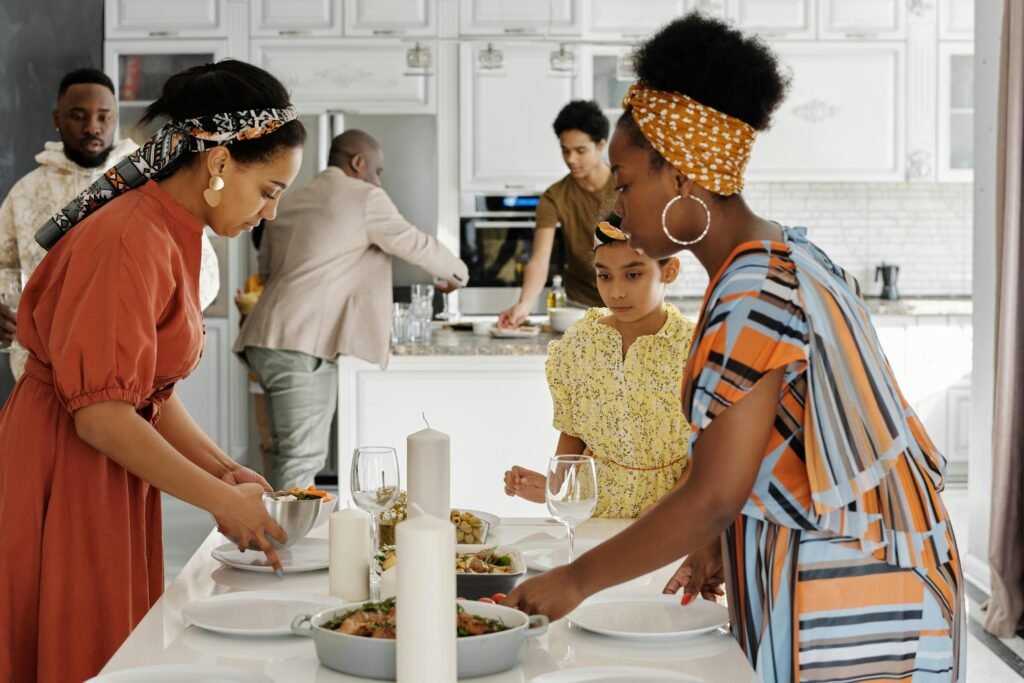
It happens at almost every family gathering.
Someone will be holding a baby or watching the children play and they will turn to me with the specific energy of a person who has just thought of something important and say it.
What's In This Post
ToggleWhen are you having another one?
Your daughter needs a sibling.
You are still young. You have time.
You will regret it when she is grown and gone.
For years I answered the same way. Maybe next year. We will see. I am still figuring things out. I left the door open because keeping it open was easier than closing it in front of people who had strong feelings about which side of it I should be standing on.
The truth is I have known for a long time. I knew it quietly for years before I was willing to say it clearly. I knew it in the particular stillness of certain moments when I looked at my life and my daughter and the shape of what I was building and felt not the absence of another child but the completeness of what I already had.
The truth is I do not want another child.
Not because I cannot afford one now. I am in a better financial position than I have ever been. Not because I do not love children. I do. Not because my relationship status makes it impossible. Because when I sit with the question honestly, outside the pressure and the expectations and the social script about what a good mother is supposed to want, the answer is simply and clearly no.
I am 34 years old. My daughter is 15. And for the first time I am saying this without an explanation attached to it.
I do not want another child.
That is a complete sentence. And it took me longer than it should have to believe that it was enough.If you are curious t know about her please read the article attached below

The Question I Get at Almost Every Family Gathering
There is a specific rhythm to it that I have come to recognise. A pause in the conversation. A glance between people. And then the question, delivered with genuine warmth and absolutely no awareness of how many times it has been asked before.
When are you having another one?
It is asked as though the answer is inevitable and the only variable is timing. As though wanting another child is the default and not wanting one is a temporary state of not-yet-having-decided. The question contains its own assumption that of course you will, the only question is when and answering it honestly requires first dismantling the assumption which is more work than most gatherings leave space for.
Your daughter needs a sibling
This one lands differently. Because it is not about what I want. It is about what my daughter needs. And the suggestion that she is missing something, that there is a gap in her life that I have failed to fill, arrives with a specific kind of guilt that is harder to set aside than simple social pressure.
My daughter is not missing anything. She is one of the most loved, most connected, most thoroughly accompanied human beings I have ever known. She has a mother who shows up for her fully. She has a community of relationships that sustain her. She is not a problem that needs solving with a sibling.
You will change your mind
This is the one that used to unsettle me most. Not because it felt true but because the certainty with which people said it made me doubt the certainty with which I felt the opposite. What if they knew something about my future self that I did not. What if the woman I would be at 40 would look back at this decision with a grief that my current self could not anticipate.
I have sat with this possibility seriously. Not dismissed it. Considered it honestly. And I still come back to the same place. Not because I am incapable of changing my mind but because the decision is not a reflex or a reaction. It is the considered, examined, lived-in answer to a question I have been asking myself for years.
You are still young
The biological clock reminder. Delivered as care but received as pressure. As though the existence of physical time is an argument for a decision rather than simply a context for making one. Time does not tell me what I want. It only tells me how long I have left to decide. And I have decided.
For Years I Said Maybe Next Year
I kept the door open for a long time. Not because I was genuinely undecided but because decided felt harder to defend than undecided.
Undecided people are given patience. They are understood to be in a process. Decided people who have decided not to are given argument. They are given all the reasons their decision is wrong, premature, selfish or something they will regret. And I was not always ready for those arguments.
People pleasing runs deep in women who have spent years managing other people’s comfort. The habit of softening your truth to avoid their discomfort. Of leaving space in your answer for them to hope you will eventually arrive at the conclusion they prefer. Of protecting their feelings about your life at the expense of your own clarity about it.
Maybe next year was not a lie. It was a performance of openness I did not feel in order to avoid a conversation I did not have the energy for.
Healing has changed that. Not by making me indifferent to what people think. But by giving me enough groundedness in my own perspective that I no longer need their agreement for my decision to feel solid. I know what I want. I know what I do not want. Both of those things are true without requiring anyone else to understand or accept them.
The Day I Finally Admitted the Truth
There was not a single day. There was a gradual accumulation of honesty with myself that eventually became too clear to continue softening.
I do not want another child.
Not because I am financially stretched. The blog income and the career income together put me in a more stable position than I have ever been. Not because I am in the wrong relationship. My relationship status is my business and not a prerequisite for this decision. Not because I had a difficult experience of motherhood. I love being a mother. I love my daughter with a specificity and a depth that I did not know was possible before she existed.
Simply because the vision I have for my life and the income I am building, the travel I am doing, the healing I am still in the middle of, the becoming that is still actively happening and does not include another eighteen years of beginning again with an infant. That vision is mine. It is honest. And it does not require any justification beyond the fact that it is what I actually want.
There is something important in that. The wanting does not need a reason. The not wanting does not need one either. Women are so rarely given permission to simply want what they want and not want what they do not want without providing a comprehensive rationale for both. The permission does not need to come from anyone else. I am giving it to myself.
Four siblings also taught me that a family is not a one size fit all.Read about my siblings on the attached article below
Loving Children and Wanting More Children Are Not the Same Thing
I need to say this clearly because the conflation of these two things is where so much of the pressure comes from.
I love babies. I love the specific weight of a new baby and the smell of them and the extraordinary thing it is to watch a new person begin. I love children. I find them genuinely interesting and funny and I am not the person who edges away from them at gatherings. I love being a mother. It is one of the central relationships of my life.
None of this means I want to have another child.
Loving the experience of something is not the same as wanting to repeat it. I had a meaningful experience in a relationship that was also one of the most difficult periods of my life. Loving what it gave me does not mean I want to return to it. I have loved jobs that I was right to leave. I have loved chapters of my life that are right to be chapters rather than permanent states.
Motherhood with my daughter is complete. It is whole. It is not a sample of something that requires more to be meaningful. It is a full experience of its own.
The suggestion that not wanting another child means not fully embracing motherhood or not loving children sufficiently is a logic that does not hold. What it reflects is the assumption that the desire to have children, once present at all, is by nature an unlimited desire that only circumstance should interrupt. That is someone else’s experience. Not mine.
The Arguments People Use To Change Your Mind
They come with love. I want to say that because it is true and because dismissing them entirely would be unfair to the people who offer them. They come from a genuine place of caring. They are also not arguments I find convincing.
Your daughter is lonely
My daughter is not lonely. She has friendships that sustain her, a mother who is present, extended family, and the particular richness of a life that has been given focused attention rather than divided across multiple children. Loneliness is not an automatic feature of being an only child. It is a human experience that happens to only children and children with four siblings and everyone in between.
The assumption that a sibling automatically means companionship and that the absence of one automatically means isolation does not reflect the reality of most families I know. Some siblings are each other’s closest people. Some siblings do not speak for years. The presence of a sibling is not a guarantee of the connection people imagine it provides.
What if something happens to her
This one requires the most careful response because it comes from the most genuine place of care.
I cannot make family planning decisions based on the management of grief I might experience from a loss I cannot predict or prevent. If I had another child to protect myself from the devastation of losing my daughter I would be having a child for a reason that serves my fear rather than my genuine desire for that child’s existence. That is not fair to any child born into that purpose.
The fear of loss is real. The love behind the fear is real. But fear is not a family planning strategy.
What if something happens to you
The suggestion that my daughter needs a sibling to have someone when I am gone carries a logic I understand and a conclusion I do not accept. A sibling is not insurance. It is a person. A person whose relationship with my daughter would be shaped by a thousand things I cannot control, predict or manufacture through the decision to have them.
My daughter will have her own relationships, her own community, her own life. Bringing another child into the world to serve as her support system in my eventual absence is not a reason to have a child. It is a projection of my anxiety onto a decision about another person’s existence.
Who will she have when you are gone
The same answer. Relationships are built over a lifetime and they are not guaranteed by blood. I have siblings. The relationships are complicated. The existence of a sibling is not a promise of closeness any more than the absence of one is a promise of isolation.
My daughter will have who she has. I will do everything within my power while I am here to give her the foundation to build a life full of genuine connection. That is my job regardless of whether she has a sibling.
Financially I Could Probably Do It Now
I want to acknowledge this specifically because for a long time financial constraint was the explanation I gave myself and others for not having another child. It was partially true. It was also partially a more socially acceptable reason than the real one.
The real one is that I do not want another child.
Now that the financial argument is less available to me because I have built the income and the stability that would make it feasible, the truth of the underlying decision is clearer. I am not not having another child because I cannot afford one. I am not having another child because I do not want one.
The money was never really the reason. It was the reason I used because it did not require anyone to argue with my desire. Nobody argues with financial constraint. People argue with choice. And I was not always ready to have that argument.
I am ready now. The choice is mine and it does not require financial justification or any other kind.
Healing Taught Me That I Don't Need To Justify Every Decision
The healing work I have done over the past several years has changed many things about how I move through my own life. One of the most significant changes is the relationship I have with my own decisions.
I used to experience my choices as things that required consensus. As though the decision was not fully made until it had been approved by the people around me. As though their comfort with my choices was a prerequisite for my confidence in them.
This is the architecture of people-pleasing. The belief that your choices about your own life are subject to other people’s review and that their disapproval or confusion is evidence that you have gotten something wrong.
Healing dismantled that architecture slowly and specifically. It showed me that I am the expert on my own life in a way that nobody else can be. That the discomfort other people feel about my decisions is information about their expectations, not information about the quality of my choices. That I am allowed to know what I want and act on it without requiring anyone to understand it first.
I do not want another child is a decision I have made about my own life and my own body and my own future. The people who are uncomfortable with it are uncomfortable with their own expectations of what my life should look like. That is their work to do. Not mine.
Why Women Are Expected To Defend Their Family Size
The questions do not stop at one child.
Women with no children are asked when they are having them. Women with one are asked when they are having another. Women with two are asked if they are trying for a boy or a girl. Women with four are asked if they know how that happens. Women with five are asked if they are done.
There is no family size that is considered complete by the general public’s standards. The target moves with whatever the woman in question has chosen, positioning itself always slightly beyond where she is, ensuring that she is always slightly behind the expectation.
This is not accidental. It reflects a deep cultural difficulty with women who make autonomous decisions about their bodies and their families. Who consider their own desire to be a valid input in decisions about their own lives. Who do not treat reproduction as an obligation to be fulfilled on a social schedule.
The family size question is rarely just a question about family size. It is a question about whether you are conforming to the expected script. And women who are not conforming to it either because they have too many children or too few by whoever is doing the counting are asked to explain themselves in a way that men with the same family situations are almost never asked to explain themselves.
I am done explaining myself. My family is the size it is because that is what I have chosen. That is sufficient.
What Being a One-Child Family Has Given Us
I want to talk about what this life actually looks like because it is not the life of lack that the pressure implies.
A close mother-daughter bond that is one of the central relationships of my life. She knows me and I know her with a depth of attention that is specific to the amount of presence we have been able to give each other. Our relationship is not divided. It is whole.
More flexibility in how I build my life and hers. The financial and logistical demands of one child’s life leave room for choices that multiple children’s needs would compress. That room has produced opportunities for both of us that I am grateful for.
Financial freedom that has allowed me to build the income and the stability and the house and the savings that two or three children’s needs might have required differently. I have been able to invest in her education, her opportunities and our life together in ways that feel right for us.
More travel together and separately. The solo trips I take as a healing and independent practice. The trips we take together that she will carry in her memories of being fifteen and going places with her mother who believed the world was available to them.
More time together in the specific unhurried way that is possible when you are not distributing your attention across multiple small people. The conversations we have had. The things she has told me because I was present enough to be told. The relationship we are building that will be one of the longest relationships of both our lives.
This is not a lesser family. It is ours.
The Difference Between a Desire and a Social Expectation
I want to ask you a question and I want you to sit with it honestly before you answer.
If nobody ever asked you about having another child. If no family member ever mentioned siblings. If no friend ever talked about how their children played together. If the entire social conversation about family size simply did not exist.
Would you still want another child?
Or is some of the wanting or some of the guilt about not wanting coming from the expectation rather than from your own genuine desire?
This is the question that clarified everything for me. When I removed the social noise from the question and sat with what I actually wanted in the quiet, the answer was clear. Not more children. The life I am building. The daughter I am raising. The becoming that is still happening.
Desire and social expectation can feel identical from the inside especially when you have been living with the expectation for long enough that it has begun to feel like yours. The way to tell them apart is to remove the expectation and see what remains.
What remains for me is a complete answer. No more children. And a life I am genuinely at peace with.
What I Would Tell Women Feeling Pressured To Have Another Child
Listen to yourself. Not to the question that gets asked at gatherings. Not to the concern that gets expressed by people who love you. Not to the cultural script about what a complete family looks like. To your own quiet honest answer to the question of what you actually want.
Ignore timelines. The biological clock is real as a physiological matter. It is not a decision-making framework. Time tells you how long you have. It does not tell you what to do with that time. The urgency other people feel on your behalf is theirs to manage.
Separate desire from guilt. The guilt of not wanting what you are expected to want is real and it can masquerade as desire. If you are not sure whether you want another child or whether you feel guilty for not wanting one, those are different situations that require different responses. Guilt is not a reason to have a child.
Stop making decisions based on fear. Fear of regret, fear of your child’s loneliness, fear of what people will think, fear of what might happen later none of these are sound foundations for a decision about whether to bring a human being into the world. Fear is information. It is not instruction.
Trust yourself. You know your life and your capacity and your desire more accurately than anyone outside of it does. The people offering opinions about your family size are offering them from the outside. You are living the inside. Trust the view from there.
My Daughter Is Not a Problem That Needs Solving
She is loved. Fully and specifically and without the dilution that the sibling conversation implies would improve her life.
She is supported. By a mother who has built a life that can sustain her and itself simultaneously. By relationships that are genuine and sustaining. By a community that is hers.
She is thriving. Not despite being an only child. Simply. She is thriving.
Being an only child is not a condition. It is not a deficit. It is not something that requires addressing or correcting or supplementing with a sibling to become adequate. It is a life circumstance that she moves through with the specific advantages and the specific challenges that every life circumstance contains.
The framing of her as someone who needs something she does not have is the framing that other people bring to her life. It is not the framing she brings to her own. She is not sitting around aware of a gap. She is living her life. Fully. As people do.
My family is not a problem that needs a solution. It is a family. The one I have built. The one I have chosen. The one that is complete.
Final Thoughts. My Family Is Complete
For years I thought I needed a better reason.
More money. A better career. A more settled relationship. Better timing. The right circumstances that would make not wanting another child feel more justifiable and less like a failure of imagination or love or ambition.
But healing taught me something I could not have arrived at through logic alone.
I do not want another child is a complete sentence.
It does not require a because. It does not require a however. It does not require the softening of a maybe or the defensive addition of I love children though or the qualifying of right now at the end.
It is the honest, examined, settled truth of what I want for my life. And for the first time I am comfortable saying it without apology, without explanation and without the door held slightly open for other people’s comfort.
My family is my daughter and me. The house we live in. The life we are building together. The relationship we are deepening with every year that passes.
My family is complete.
And that is enough.
With love,
Nia
Faq
Is it okay to only want one child?
Yes completely. Family size is a deeply personal decision that belongs to the individual or couple making it. Wanting one child is a valid and considered choice that reflects a specific vision for a life rather than a failure of desire or love. Many women who choose to have one child report that the decision was right for their lives and that their families feel genuinely complete.
Will an only child be lonely?
Not necessarily and not automatically. Only children build friendships, extended family relationships and community connections that provide the companionship and belonging that the sibling question implies is missing. Research on only children consistently shows that they develop strong social skills and form meaningful relationships. Loneliness is a human experience that is not determined by sibling status.
Do parents regret not having more children?
Some do. Some do not. Regret is individual and cannot be predicted reliably from the outside. What is worth noting is that the pressure to have more children is so significant that it can be difficult to distinguish between genuine desire and the guilt of not conforming to an expectation. Women who make family size decisions from their own honest desire rather than from social pressure report significantly lower rates of regret than women who had more children than they wanted because they felt they should.
Can an only child grow up happy and well-adjusted?
Yes. Research consistently shows that only children are as happy and well-adjusted as children with siblings. The stereotype of the lonely or socially underdeveloped only child is not supported by evidence. Only children often develop strong independence, close relationships with adults and the kind of self-sufficiency that comes from having to develop their own internal resources.
Is it selfish not to want more children?
No. Choosing the family size that is right for your life is not selfishness. Having children you do not want in order to meet someone else’s expectations would be significantly more harmful to those children than choosing not to have them. Autonomous decisions about reproduction are the foundation of a woman’s right to build a life on her own terms. That right does not become selfishness because other people are uncomfortable with how you exercise it.
Why do people pressure women to have more children?
The pressure reflects cultural assumptions about what a complete family looks like, what a good mother wants and what women’s bodies and lives are for. It also reflects genuine affection expressed through the only framework available to people who have not examined those assumptions. Understanding where the pressure comes from does not require accepting it as relevant to your decision.
How do I deal with pressure to have another baby?
Decide what your actual answer is and practice saying it without explanation. You do not owe anyone a justification for your family size. A simple and consistent response to the question removes the invitation for further debate. Something like my family is complete said without apology tends to close the conversation more effectively than a detailed explanation which can become an opening for argument.