Female Traveling Solo.The Complete Honest Guide Every Woman Needs Before Her First Solo Trip
I remember the exact moment I decided to book my first solo trip.
I was sitting at my desk, exhausted from the week, scrolling through photographs of a destination I had wanted to visit for years. I had been waiting for the right person to go with. Waiting for the right time. Waiting until I felt ready, whatever that meant. And somewhere in the middle of that scrolling I understood that the waiting was the problem. Nobody was coming. The right time was not arriving. And the version of my life that included that trip was only going to happen if I stopped waiting and booked it alone.
What's In This Post
ToggleSo I did.
What followed was the most disorienting, liberating, and quietly transformative experience of my adult life. Not because anything dramatic happened. Because nothing did. I navigated every airport alone. I ate every meal alone, and then discovered that eating alone in a beautiful place is one of the most peaceful experiences available to a person who is usually surrounded by the needs and schedules of other people. I made every decision entirely based on what I wanted. I came home different in ways I am still discovering.
This guide is everything I wish someone had told me before that first trip. The practical, the safety, the emotional, and the honest truth about what solo female travel actually feels like from the inside. Not the Instagram version. The real one.
Read related post: Travel Outfit Ideas for Every Trip
What Solo Female Travel Actually Feels Like
Let me start with the version of this conversation that most travel guides skip.
Solo travel for women is not a continuous highlight reel of confident independence and perfect sunsets. It contains those things. It also contains the evening in a new city when the loneliness is real and you are sitting in a restaurant eating alone wondering whether you made the right choice. It contains the airport transit where you are not sure which queue to join and there is nobody to look at for confirmation. It contains the first night in unfamiliar accommodation when the sounds of an unfamiliar building keep you slightly awake.
All of those things are real and all of them are survivable. More than survivable. They are the moments that produce the specific confidence that solo travel generates and that no other experience quite replicates.
Because what happens when you navigate the difficult airport transit alone, when you find the right queue and get through it and come out the other side, is that you have evidence. Specific, personal, undeniable evidence that you can handle things on your own. That you are more capable than you knew. That the competence was always there and only needed the situation to reveal it.
That evidence is what comes home with you from a solo trip and stays.
Read related post: 10 Best Beach Destinations for Solo Female Travelers. Safe, Stunning and Worth Every Penny
Why Women Are Choosing Solo Travel in Greater Numbers Than Ever
The data on solo female travel is striking. Women now make up the majority of solo travelers globally. The solo travel industry has grown significantly over the past decade and the growth is driven overwhelmingly by women traveling alone.
This is not because the world has suddenly become safer or simpler for women traveling alone. It is because women have collectively decided that waiting for the right companion to experience the world is a cost they are no longer willing to pay. That their lives and their time and their passport pages are their own. That the independence and self-knowledge that solo travel produces is worth whatever discomfort and preparation the experience requires.
I travel solo because it is one of the most consistent sources of clarity and genuine self-knowledge available to me. When you strip away every familiar person, every familiar routine, every familiar environment, what remains is the most unedited version of yourself. The things you notice. The choices you make when nobody else is influencing them. The way you respond to difficulty. The things that make you laugh when you are completely alone. All of it is more revealing than any amount of journaling or therapy, not because therapy is not valuable but because travel puts you in genuinely new situations that reveal parts of yourself that comfortable familiarity never reaches.
Read related post: How I Protect My Hair While Traveling: My Low-Maintenance Routine for Every Trip
How to Choose Your First Solo Destination
The first destination should match your current comfort level rather than your aspirational comfort level.
There is a version of solo travel advice that tells you to challenge yourself maximally from the first trip. To go somewhere genuinely remote, somewhere with a significant language barrier, somewhere that will really push your boundaries. And there is genuine value in challenge. But a first solo trip that is too challenging for your current level of travel experience can produce a first experience that puts you off solo travel entirely rather than converting you to it.
The questions that actually determine the right first destination are these.
How comfortable are you navigating unfamiliar airports and transit systems. If the answer is not very then a destination with a straightforward, English-signposted airport and reliable public transport is a better starting point than one that requires multiple connections and local transport negotiation on day one.
How important is a pre-existing solo female travel community at the destination. Some destinations, Bali, Zanzibar, Porto, Lisbon, have such an established community of solo female travellers that finding company, information, and general orientation is genuinely easy on arrival. Others are more solitary experiences that reward a specific kind of confidence.
How do you feel about language barriers. A destination where English is widely spoken or where your existing language skills give you a foundation is a gentler first experience than one where you are operating in complete linguistic unfamiliarity from day one.
What is the accommodation infrastructure like. A first solo trip is easier when the accommodation options include good hostels with strong social infrastructure, reliable boutique guesthouses with helpful staff, or well-reviewed hotels with responsive management. All three are easier to navigate alone than budget accommodation with minimal infrastructure.
My personal recommendation for first solo trips by experience level is this. If you have never traveled internationally alone before, consider a destination within the same continent as your home or one with a very established English-speaking tourist infrastructure. If you have some international travel experience but not solo, consider a destination like Zanzibar, Bali, or Lisbon where the solo female travel community is strong and the orientation is relatively gentle. If you are comfortable with independent travel generally and simply have not done it alone before, almost anywhere is accessible with the right preparation.
Read related post: 10 Best Beach Destinations for Solo Female Travelers. Safe, Stunning and Worth Every Penny
Planning Your Solo Trip: What to Do Before You Book
Passport and visa requirements. Check the validity requirement for your passport at the destination, not just that it has not expired but that it has the required months of validity remaining beyond your return date, which varies by country. Check the visa requirements for your specific passport well in advance, not the week before. Some destinations require visas that take weeks to process.
Travel insurance is not optional. I want to be direct about this. Travel insurance for solo travel is not the thing you skip to save money. It is the thing that determines whether a medical emergency at your destination costs you a manageable claim or an unmanageable financial crisis. Look for a policy that covers medical evacuation specifically, which is the coverage that matters most in destinations where the local medical infrastructure requires evacuation to a better-equipped facility for serious conditions. Read the exclusions before you buy.
Register with your government’s travel registry. Many governments offer a traveler registration service that allows them to contact you in the event of an emergency at your destination. This costs nothing and takes five minutes. For South African travelers this is the Department of International Relations and Cooperation registry.
Understand the cultural context of your destination. Dress codes, photography etiquette, behaviour in religious spaces, the expected dynamic between foreign women and local men in that specific context, these are all worth researching specifically rather than assuming the norms are the same as at home. This research is both safety-relevant and respect-relevant. The two overlap considerably.
Have a communication plan. Know which SIM card or data solution you are using at the destination before you arrive. Arriving at a foreign airport with no data and no way to access your booking confirmation, your accommodation address, or your map is an avoidable and stressful situation. Either get a local SIM at the airport on arrival or ensure your home network has international data coverage for the destination.
Accommodation for Solo Female Travelers: What to Look For
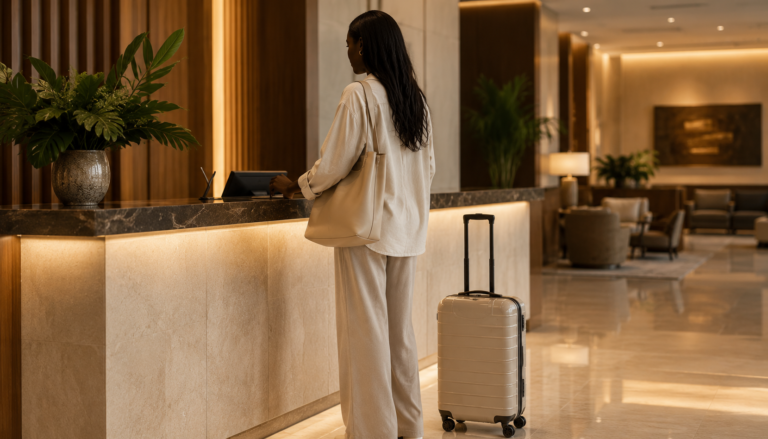
The accommodation choice for a solo female traveler requires a different set of priorities from the accommodation choice for a couple or a group, and most standard hotel review platforms do not filter for the things that actually matter.
Location relative to where you will actually be going. The cheapest accommodation that requires thirty minutes of unsafe evening transport to reach any restaurant or activity is not a bargain. The slightly more expensive option that is walkable to where you want to spend your evenings is the better value when security and ease of movement are factored in.
Reviews from solo female travelers specifically. Filter reviews where possible for solo traveler mentions. Look for language about staff helpfulness, room security, the feeling of safety in the immediate surroundings, and the general atmosphere for a woman traveling alone.
The entrance and immediate surroundings at night. A hotel that looks fine during the day can be in a neighbourhood that is poorly lit, quiet in a way that feels exposed, or surrounded by establishments that create an uncomfortable atmosphere for a woman walking alone after dark. Street view tools and recent traveler reports can give you a sense of this before you book.
Communication responsiveness before booking. A property that responds to a pre-booking inquiry quickly, helpfully, and accurately is demonstrating the quality of care you can expect during your stay. A property that ignores or gives vague responses to pre-booking questions is showing you something important about how it will treat you when something goes wrong during the stay.
Consider accommodation type relative to your social needs. A hostel with a good common room is genuinely the best option for a solo traveler who wants to meet people and is not primarily prioritising privacy. A boutique guesthouse with helpful staff and good local knowledge is often the best option for a solo traveler who wants a balance of privacy and support. A large international hotel is often the safest and most comfortable option for a solo traveler prioritising security above all else.
Getting Around Alone: Transport Safety for Solo Female Travelers
Always have the accommodation address written in the local script. Not just in English. In the local language and alphabet. Your driver may not read English. Your phone may die. A physical card with the address in the local script given to you by your accommodation is worth requesting at check-in.
Use official, verified transport. At airports use the official taxi rank or a ride-sharing app rather than accepting offers from individuals who approach you in the arrivals hall. The approach from the arrivals hall is a common starting point for transport scams and overcharging. The official queue and the app-based option are more expensive in some cases and more reliable in every case.
Share your ride details. Before getting into a taxi or rideshare alone, send the vehicle details, the number plate, and the driver’s name if visible, to someone. Most rideshare apps have a built-in journey sharing function. Use it every time for solo night travel.
Trust your instincts about a driver. If something about the interaction feels wrong before you get in the vehicle, do not get in the vehicle. Find a different option. The cost of inconvenience is always lower than the alternative.
For longer journeys, book the reputable option. The unofficial, cheaper transport option that a stranger recommends at the bus station is very rarely the right choice for a solo female traveler. Reputable bus companies, train services, and established ferry operators cost more and deliver on safety in a way that informal alternatives do not consistently.
Solo Dining: The Part Most Guides Get Wrong

Most solo travel guides address the solo dining concern in a single sentence. Just do it. You will be fine. Nobody cares.
This is technically true and practically unhelpful. Here is the more honest version.
Eating alone at a restaurant feels uncomfortable the first time because it is unfamiliar and because most dining environments are structured around pairs and groups. That unfamiliarity fades significantly after the second and third experience. By a week into a solo trip most people have stopped thinking about it.
The practical things that make solo dining more comfortable are these.
Sit at the bar or counter if one is available. Counter seating is the natural environment for solo diners. The energy is different, more conversational, more accepted as a solo experience, and the service tends to be more attentive.
Bring something. A book, a journal, a fully downloaded show on your phone. Not because you will necessarily use it but because having it removes the self-consciousness of having nothing to look at during the pauses in service.
Eat earlier than the primary dining hour. The 7pm rush of couples and groups is a more self-conscious environment for solo dining than the 6pm opening hour when the restaurant is quieter and the staff have more time to be engaged.
Order something you genuinely want to eat. Not the safest, most generic option. The thing on the menu that you actually want. You are in a place you have never been, probably eating food you do not have access to at home, and you ordered it alone because you wanted to. That is a specifically good thing and it is worth experiencing fully.
Read related post:
Things to Do in Seoul as a Solo Female Traveler. Safe, Soft and Surprisingly Healing
What Solo Travel Does to You
This is the section I most want first-time solo female travelers to read because it is the thing that was most unexpected for me and that I hear most consistently from other women who have done it.
Solo travel changes something in you that is difficult to articulate precisely but that is immediately recognisable to anyone who has experienced it.
It is not simply confidence, though it builds confidence. It is something more like evidence. After your first solo trip you have specific, personal, concrete evidence that you can navigate unfamiliar situations alone. That you can handle things going slightly wrong. That you can make decisions with incomplete information and live with the outcomes. That you are capable of a version of independent existence that most of your daily life never asks of you.
That evidence does not stay in the trip. It comes home with you. It changes how you see options in your regular life. The things that once seemed too complicated or too risky or too much to manage alone look different after you have navigated airports, foreign cities, and unfamiliar transport systems by yourself for ten days.
I am a different woman because of the trips I have taken alone. Not because anything dramatic happened. Because the accumulation of handled situations, of decisions made and navigated and survived, produced a version of myself that I did not know how to access before I started traveling this way.
Read related post: 10 Things My Online Income Made PossibleThat Had Nothing To Do With Getting Rich
Packing for Solo Female Travel: What I Actually Bring and Why
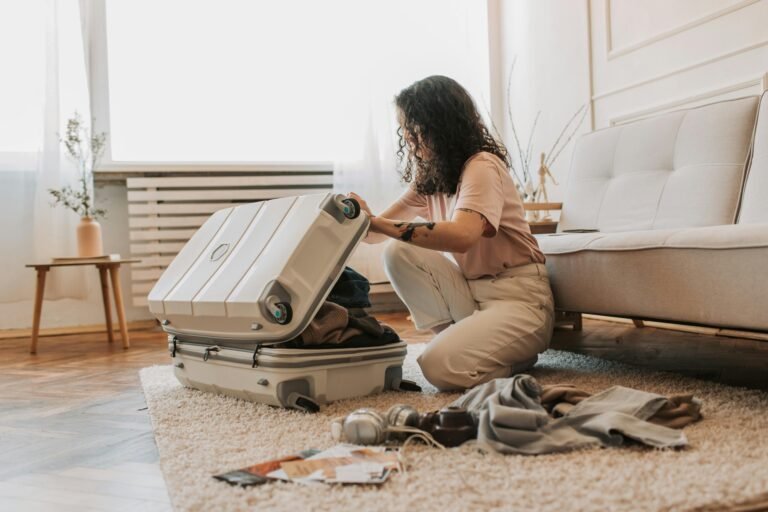
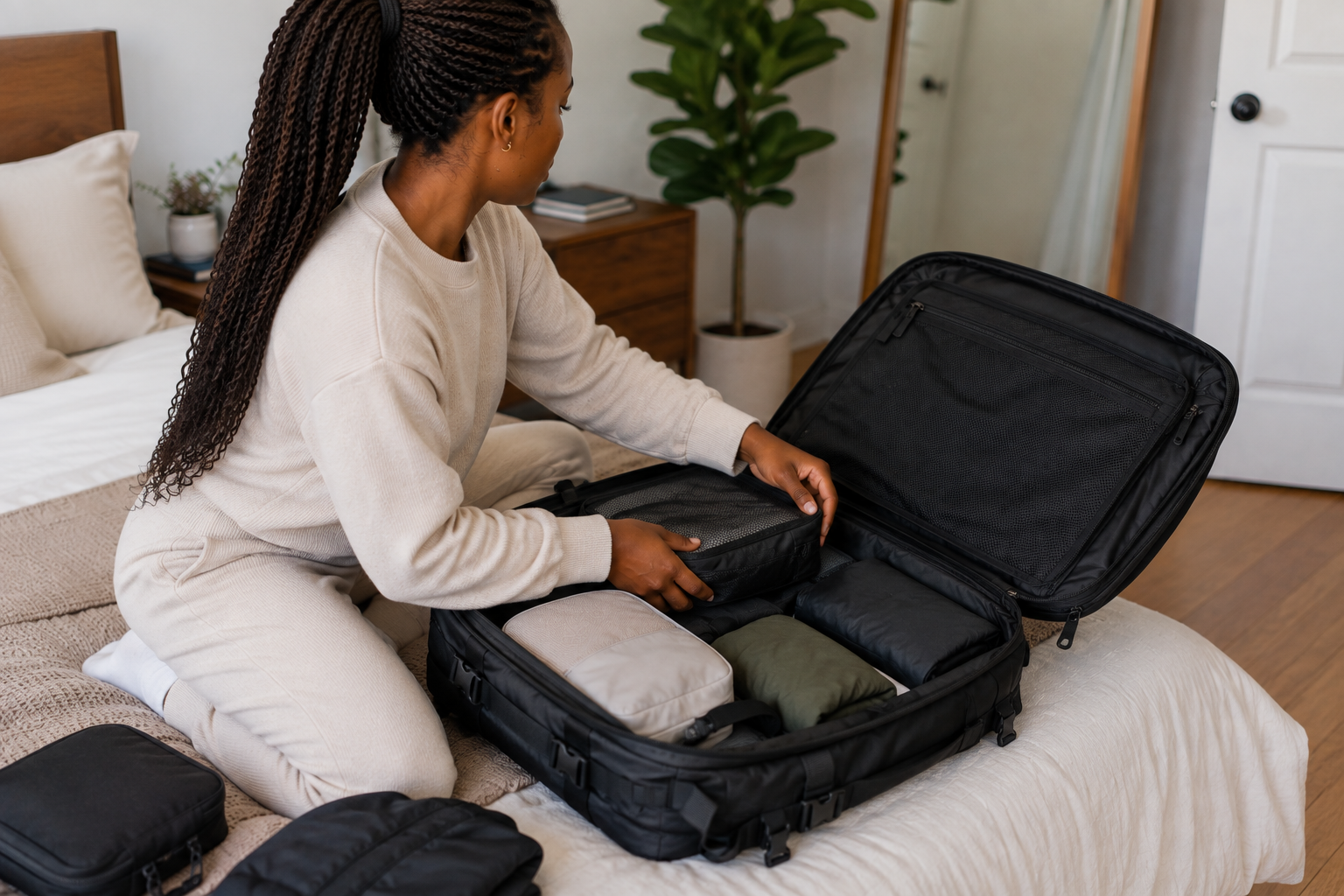
The cardinal rule of solo female travel packing is this. Pack light enough to carry your own bag without struggling. A heavy bag is a safety liability, a physical burden, and a constraint on every transport decision you make throughout the trip. A bag you can lift, carry, and manage entirely alone is a bag that gives you freedom.
The Bags i use for solo traveling
Osprey Fairview 40 Women’s Travel Pack
This is the bag that changed how I travel. Designed specifically for women with a torso-fit system, it converts from a backpack to a carry-on by tucking the straps behind a zip panel. At 40 litres it holds two weeks of clothing for warm destinations without exceeding carry-on limits on most airlines. The weight distribution for a female torso is genuinely different from a generic pack of the same size. Worth every cent.This Osprey backpack is perfect for travel! It’s spacious and comes with a laptop sleeve and toiletry pocket.
Travelon Anti-Theft Classic Crossbody Bag
Travelon Anti-Theft Classic Crossbody Bag,is for everything the main pack is not carrying. Slash-resistant straps and panels, a locking zipper, and built-in RFID-blocking card slots. Sits securely across the body in crowded markets and busy transit environments. This is not a luxury purchase. It is the practical replacement for the open-topped shoulder bag that is the most common theft vulnerability for solo female travelers.
Safety and Security for solo female travelers
Pacsafe Doorstop Alarm
Under fifteen dollars on Amazon. Slides under any inward-opening hotel or guesthouse door. If the door is pushed from outside the alarm sounds at 120 decibels. For accommodation where the room security feels uncertain this produces a level of peace of mind that no standard door lock provides. It weighs almost nothing and takes up almost no space in the bag.
RFID Blocking Passport Holder and Travel Wallet
Keeps your passport, travel insurance documents, emergency cash, and backup card in one secure, electronically protected place. Wear it under your clothing in busy transit environments. The electronic pickpocketing that RFID blocking prevents is not a theoretical risk in high-traffic tourist destinations.
Personal Safety Alarm (Birdie or similar)
A loud personal alarm that can be triggered instantly in any situation where you feel unsafe. Fits on a keyring. Costs under twenty dollars. The sound it produces is enough to draw immediate attention in any populated environment. A simple, accessible, non-aggressive safety tool that belongs in every solo female traveler’s bag.
Technology for solo female travelers
Pacsafe Doorstop Alarm (referenced above under safety but worth repeating here because the sleep benefit is significant)
Slip Pure Silk Sleep Mask
Sleep quality directly affects decision-making capacity, emotional resilience, and physical energy on a solo trip. Long-haul flights, rooms with inadequate blackout curtains, and early morning hostel environments all disrupt sleep in ways a proper sleep mask significantly mitigates.
ZIMASILK Mulberry Silk Pillowcase or Slip Travel Size Pillowcase
For natural hair and protective styles this is non-negotiable. Hotel pillowcases are almost always cotton and will rough up natural hair, disturb a protective style, and undo everything the satin bonnet is trying to achieve if the bonnet slips during sleep. A travel-size silk pillowcase folds flat into any bag pocket.
Satin Bonnet for Hair (Large, for protective styles)
If you are traveling with natural hair or a protective style, search Amazon for large satin bonnet for braids. The size matters because a standard bonnet will not fully contain box braids or knotless braids. A large satin bonnet does.
Sleep and Comfort
Pacsafe Doorstop Alarm (referenced above under safety but worth repeating here because the sleep benefit is significant)
Slip Pure Silk Sleep Mask
Sleep quality directly affects decision-making capacity, emotional resilience, and physical energy on a solo trip. Long-haul flights, rooms with inadequate blackout curtains, and early morning hostel environments all disrupt sleep in ways a proper sleep mask significantly mitigates.
ZIMASILK Mulberry Silk Pillowcase or Slip Travel Size Pillowcase
For natural hair and protective styles this is non-negotiable. Hotel pillowcases are almost always cotton and will rough up natural hair, disturb a protective style, and undo everything the satin bonnet is trying to achieve if the bonnet slips during sleep. A travel-size silk pillowcase folds flat into any bag pocket.
Satin Bonnet for Hair (Large, for protective styles)
If you are traveling with natural hair or a protective style, search Amazon for large satin bonnet for braids. The size matters because a standard bonnet will not fully contain box braids or knotless braids. A large satin bonnet does.
Health and Wellness
Compact Travel First Aid Kit
Search Amazon for compact travel first aid kit. One that includes plasters in multiple sizes, antiseptic wipes, pain relief, stomach medication, and wound closure strips. Add your own prescription medication, a doctor’s note for any controlled medication, and antihistamine tablets for unexpected allergic reactions.
Sawyer Products Premium Permethrin Insect Repellent
For tropical destinations, sub-Saharan Africa, Southeast Asia, and anywhere malaria or dengue is present. Applied to clothing rather than skin, lasts through multiple washes, and is more effective than skin-applied DEET for most insects. For Zanzibar, Bali, and similar destinations this belongs in the bag without question.
Liquid IV Hydration Multiplier
Dehydration is one of the most consistently underestimated factors in solo travel discomfort. Long flights, heat, more walking than usual, and different food all contribute. One sachet dissolved in water after a long flight and one on the most active days of a beach or walking trip makes a measurable difference to how you feel and how well you function.
Physix Gear Sport Compression Socks
For any flight over six hours. Deep vein thrombosis risk on long-haul flights is real and compression socks reduce it meaningfully while also reducing the swollen, heavy-leg feeling that arrives after a long flight. Search Amazon for women’s compression socks for flying.
Feminine hygiene supplies from home
In many international destinations your preferred brand or product type is simply not available. Bring what you need for the full duration of the trip rather than assuming you will find it at the destination.
Toiletries
Matador FlatPak Toiletry Case
A completely waterproof toiletry bag that folds completely flat when empty. Takes up almost no space in the bag. Holds a full complement of miniature toiletry bottles when packed. The flat design means it fits in any gap rather than requiring a dedicated compartment.
GoToob Plus Silicone Travel Bottles 3-Pack
Refillable, leakproof, squeezable silicone travel bottles for decanting your own products. TSA-compliant. More economical and more environmentally responsible than buying travel-size products for every trip.
Neutrogena Ultra Sheer Dry-Touch Sunscreen SPF 100
Daily SPF application is non-negotiable at any destination with significant sun exposure, which is most of the destinations worth traveling to. This specific product is widely available on Amazon, has a texture that works under makeup and alone, and provides genuine high-level protection without the heavy, greasy feeling of many high-SPF options.
What to Leave at Home when traveling solo
Expensive or meaningful jewellery. Anything you would be devastated to lose. Anything you have not used in the past month because you will not use it on a trip either. Heavy denim for trips longer than a weekend city break. More than one pair of heels. Any toiletry in a size that does not comply with carry-on liquid restrictions.
The test for every item is this. If I had to walk fast for thirty minutes with this bag right now would I wish this item was not in it. If the answer is yes it does not go in the bag.
Money and Finances for Solo Female Travelers
The daily bag for everything the main pack is not carrying. Slash-resistant straps and panels, a locking zipper, and built-in RFID-blocking card slots. Sits securely across the body in crowded markets and busy transit environments. This is not a luxury purchase. It is the practical replacement for the open-topped shoulder bag that is the most common theft vulnerability for solo female travelers.
Money and Finances for Solo Female Travelers
Never keep everything in one place. Split your cash and cards between your main bag, your daily crossbody, and a money belt or neck wallet worn under your clothing. The version of you who has been pickpocketed should still have access to enough money and at least one card to continue functioning.
Notify your bank before traveling. A frozen card in a foreign country because your bank flagged an unfamiliar transaction is a genuinely stressful situation that a five-minute pre-travel phone call prevents entirely.
Have a backup card from a different provider. If your primary card is compromised at a foreign ATM, a backup card from a completely different bank network means you are not without access to funds while the primary is being replaced.
Carry some local cash always. Cards do not work everywhere. Smaller vendors, markets, rural accommodation, and transport options in many destinations are cash only. Having local currency on you prevents the situation where the only available option cannot be paid for.
Research ATM safety at your destination. Some destinations have a higher rate of ATM skimming than others. Use ATMs attached to reputable banks during daylight hours rather than standalone ATMs in less visible locations after dark.
Communication and Staying Connected
Check in with your designated person at home on a consistent schedule rather than whenever you remember. Inconsistent check-ins create anxiety for the people who care about you and reduce the reliability of the safety net the check-in system is supposed to provide.
Download offline maps for your destination before you arrive. Google Maps allows offline map downloads for specific areas. Having the map available without data means you can navigate even when your data connection fails.
Learn the emergency number for your destination. It is not universally 911 or 999. Know what number to call in a genuine emergency before you need to make that call.
Have the address and phone number of your country’s embassy or consulate at the destination saved in your phone and written on a piece of paper. In the event of passport loss, genuine emergency, or any situation requiring consular assistance, this information needs to be accessible without a working phone.
The Emotional Reality of Solo Travel
There will be a moment on almost every solo trip, usually somewhere between day three and day five, where the novelty has worn off and the reality of being completely alone in a foreign place settles in without the excitement of the first days to soften it.
This moment is real and it is temporary and it is the moment where most people who never become solo travelers would have given up and gone home if they could.
What carries you through it is understanding that the feeling is a normal part of the experience rather than a signal that something has gone wrong. It is the dip in the middle of the learning curve that every significant new thing produces. It passes. And what follows it, usually around day six or seven, is the specific settled confidence of someone who has stayed through the difficult part and come out the other side.
The women who travel solo regularly are not women who do not feel that dip. They are women who have been through it enough times to know it passes and to trust the other side of it.
Solo Travel Destinations Worth Considering
Zanzibar, Tanzania remains one of my most consistent recommendations for solo female travelers. The combination of extraordinary beaches, rich Swahili culture, an established tourism infrastructure, and a warmth of welcome from local communities makes it one of the most rewarding solo female travel destinations in East Africa. Stone Town alone could keep you occupied for days. Nungwi and Kendwa on the north coast provide some of the best beach swimming in the Indian Ocean.
Bali, Indonesia has arguably the most established solo female travel community of any destination globally. Ubud in the interior is a natural gathering point for solo women, with an extensive yoga, wellness, and creative workshop infrastructure that makes meeting like-minded people genuinely effortless. The safety record for solo female travelers in the main tourist areas is strong.
Mauritius offers a level of natural beauty, beach quality, and cultural richness that makes it one of the most underrated solo female travel destinations in the Indian Ocean. More affordable than Seychelles with comparable natural beauty in many areas.
Seychelles is the most naturally beautiful destination in the Indian Ocean and the most consistently safe for solo female travelers. The infrastructure is excellent. The beaches are extraordinary. The trade-off is the premium price point relative to other Indian Ocean destinations.
Portugal (Lisbon and Porto) remains one of the most recommended European solo female travel destinations for good reason. Both cities are walkable, have strong English proficiency, exceptional food, genuine safety, and a hospitality culture that makes solo dining and solo sightseeing genuinely comfortable.
Read related post: 10 Safest Cities in Africa for Solo Female Travelers. Ranked, Reviewed and Personally Tested
Your First Solo Trip Will Not Be Perfect
The accommodation will be slightly different from the photographs in some way. The transport will be delayed or confusing at one point. Something you planned will not be available or will not work the way you expected. You will make at least one decision mid-trip that you immediately know was the wrong one.
All of this is normal. All of it is manageable. None of it will prevent the trip from being one of the most significant experiences of your life.
The women who have the best solo travel experiences are not the women whose trips go smoothly. They are the women who show up fully for whatever the trip actually is, including the parts that do not go to plan, and come home richer for all of it.
Book the trip.
Handle everything else as it comes.
You are more capable than you know. Solo travel is one of the most reliable ways of finding that out.
With love,
Nia
FAQ
Is solo female travel safe?
Solo female travel carries real risks that are meaningfully reducible through preparation, awareness, and good decision-making. No destination is completely without risk for any traveler. The women who travel solo most successfully are not the ones who ignore risk but the ones who research it specifically, prepare for it practically, and maintain awareness throughout the trip. The overall experience of millions of solo female travelers globally is that the trips are safe, manageable, and deeply worthwhile when approached with the right preparation.
What is the best first destination for a solo female traveler?
The best first destination matches your current comfort level rather than your aspirational one. For first-time solo international travelers, destinations with strong English proficiency, established tourism infrastructure, and an existing solo female travel community, Bali, Zanzibar, Lisbon, and Porto are consistently strong recommendations, offer the most supportive environment for building the confidence that makes subsequent trips easier.
How do I manage money safely as a solo female traveler?
Split your cash and cards between at least two separate locations on your person and in your bag. Notify your bank before travel. Carry a backup card from a different provider. Always have some local cash regardless of how card-friendly the destination appears. Research ATM safety specifically for your destination and use bank-attached ATMs during daylight hours.
What should I pack for my first solo trip?
Pack light enough to carry your own bag without assistance. An anti-theft crossbody bag for daily use, a reliable portable charger, a universal travel adapter, a doorstop alarm for accommodation security, travel insurance documentation, RFID-blocking passport holder, and a first aid kit are the non-clothing essentials that every solo female traveler needs regardless of destination.
Do I need travel insurance for solo female travel?
Yes, without qualification. Solo female travel without travel insurance is a financial risk that is not worth taking regardless of the destination. Ensure the policy covers medical evacuation specifically, which is the coverage that matters most in destinations where serious medical conditions require transport to a better-equipped facility. Read the exclusions carefully before purchasing and ensure any activities you plan, particularly water sports or adventure activities, are covered under the policy.