Ultimate Essaouira, Morocco Solo Travel Guide
This post contains affiliate links. If you click through and make a purchase or booking, I may earn a small commission at no extra cost to you. The price you pay is exactly the same either way. I only recommend products and experiences I would use myself.
Most people who visit Morocco go to Marrakech.
What's In This Post
ToggleI understand why. Marrakech is extraordinary. The Djemaa el-Fna at dusk with the food stalls smoking and the storytellers performing and the muezzin call drifting across the whole dramatic scene is one of the most sensory, alive, overwhelming urban experiences available anywhere in the world. I am not here to talk you out of Marrakech.
But there is another Morocco that most visitors rushing between Marrakech and the desert and the Atlas Mountains miss entirely. A quieter, saltier, bluer version of the country that sits on the Atlantic coast and operates at a pace so different from the inland cities that it feels like a separate country rather than a three-hour drive.
Essaouira.
The name alone has a particular beauty to it and the place lives up to the name. White and blue walls that have been photographed thousands of times and still stop you when you turn a corner and see them in person. An Atlantic wind that comes off the ocean with enough force to make the wooden fishing boats bob and the kites fly and to cool the air in a way that Marrakech never does. Seagulls. The smell of fresh fish and cumin and leather and the sea. Narrow medina streets where cats watch you from doorways and artisans work at open workshops and the pace of daily life moves at a frequency that genuinely invites you to slow down and match it.
Essaouira has been a port city, a trading hub, a Portuguese fortress, a haven for Gnawa musicians, and home to Jimi Hendrix for a period in the 1960s that the city wears lightly but mentions with justifiable pride. It has been a UNESCO World Heritage Site since 2001. And it remains, despite everything it has to offer, genuinely less crowded and genuinely less discovered than it deserves to be.
If you are dreaming of a destination where you can wander through centuries-old streets, sip mint tea overlooking the ocean, browse artisan shops, and watch breathtaking sunsets without the crowds, Essaouira might just become your favourite city in Morocco.
Why Visit Essaouira?
A UNESCO World Heritage Medina that is genuinely and completely navigable on foot, without the density and intensity of Marrakech’s souks, while still containing enough history, craft, and architectural beauty to keep you exploring for days. The medina was built by Portuguese and later French influences and has a European seafront town quality underneath its distinctly Moroccan character.
Beautiful Atlantic beaches stretching for kilometres south of the city walls with consistent wind that makes them some of the best kitesurfing and windsurfing conditions in the world and calmer northern sections suitable for walking, horse riding, and casual swimming.
A slower pace than Marrakech that is not simply a lower energy version of the same experience but a genuinely different relationship with time. The medina vendors in Essaouira are notably less aggressive in their approaches to visitors than in some other Moroccan cities. The overall atmosphere invites sitting with a tea and watching rather than moving continuously.
Exceptional fresh seafood at the port fish market where the morning’s catch is displayed and grilled to order in front of you. The combination of Atlantic coast fishing heritage and Moroccan spice traditions produces food that is among the best value and most memorable in Morocco.
A vibrant art scene that has developed from the city’s long association with musicians, artists, and creatives. The galleries of the medina contain genuinely serious work by local and international artists.
Surf culture that has grown around the consistent Atlantic winds and the long beach into a community of international surfers and kitesurfers who have made Essaouira one of the most reliable wind and wave destinations in North Africa.
Friendly, welcoming atmosphere that is consistently noted by travelers as distinctive within Morocco. The combination of the city’s trading history, its artistic community, and its smaller scale produces an environment that feels genuinely welcoming rather than performatively hospitable.
Boutique riads that convert traditional Moroccan courtyard houses into some of the most atmospheric accommodation available anywhere in the world. The combination of geometric tile, carved plasterwork, and courtyard garden in an Essaouira riad is a specific aesthetic experience worth planning a trip around.
Rich history spanning Phoenician settlement, Roman occupation, Portuguese fortress-building, and the Alaouite dynasty that rebuilt the current city in the 18th century under Sultan Mohammed III.
The argan oil tradition of the surrounding region where Berber women cooperatives produce the cosmetic and culinary oil that is genuinely one of Morocco’s most valuable agricultural exports and worth understanding in its real economic and social context before purchasing.
Read related post: Mauritius for Solo Female Travelers: The Ultimate Travel Guide
Where Is Essaouira?
Essaouira sits on Morocco’s Atlantic coast in the Marrakech-Safi region approximately 175 kilometres west of Marrakech and 175 kilometres north of Agadir. The drive from Marrakech takes approximately three hours on well-maintained roads that pass through increasingly dramatic Atlantic coastal landscapes as you approach the city.
From Marrakech: CTM buses run regular services between Marrakech’s main bus station and Essaouira. The journey takes approximately three to three and a half hours. Shared taxis and private transfers are also widely available. The private transfer is the most comfortable option for a solo female traveler arriving for the first time.
From Agadir: The coastal drive north from Agadir to Essaouira takes approximately two and a half to three hours. This route passes through the argan forest region where you will see the distinctive argan trees with goats occasionally visible in their branches.
Essaouira Airport (ESU) is a small regional airport approximately 15 kilometres south of the city. It receives a limited number of international and domestic flights. Most international visitors fly into Marrakech Menara Airport and transfer to Essaouira by road.
Best Time to Visit Essaouira
| Season | Weather | Best For |
|---|---|---|
| March to May | Mild, 18–22°C, occasional rain | Exploring the medina, photography, cultural visits |
| June to August | Warm, 22–26°C, very windy | Surfing, kitesurfing, beach activities |
| September to November | Pleasant, 20–24°C, less wind | Sightseeing, beach relaxation, comfortable walking |
| December to February | Cooler, 14–18°C, quieter | Budget travel, authentic local atmosphere |
March to May is an excellent window that is underrated by most travel guides. The temperatures are genuinely comfortable for extensive medina walking. The wind is present but not at its peak summer intensity. Accommodation prices are typically below peak season rates.
June to August is peak season for both tourism and wind. The consistent Atlantic trade winds that make Essaouira such a celebrated kitesurfing destination reach their annual maximum during these months. The beach is at its most social and the city is at its most international.
September to November is my personal recommendation for a first visit. The summer crowds have reduced. The temperatures remain warm and comfortable. The wind moderates from its peak summer intensity. The light in September and October is particularly beautiful for photography.
December to February offers the most authentic experience of daily Essaouira life with the fewest other tourists. The temperatures are cooler but rarely cold. Accommodation is at its most affordable. The medina feels genuinely local rather than tourist-oriented.
How Many Days Do You Need to Visit Essaouira?
Two days covers the medina thoroughly, the port and fish market, the beach, at least one good sunset, and enough of the restaurant scene to get a genuine sense of the food. This is the minimum for the destination to feel like something you experienced rather than simply passed through.
Three days is the most commonly recommended and most satisfying duration for a first visit. The extra day allows for a spa or hammam experience, deeper exploration of the artisan quarter, a visit to an argan oil cooperative outside the city, a surf lesson if that appeals, and enough time to genuinely settle into the pace of the place rather than spending the whole stay feeling like you are rushing between sites.
Five days is for the traveler who wants to fully inhabit Essaouira rather than visit it. A day trip to the beach village of Sidi Kaouki to the south. Time in the art galleries that a three-day visit might only glimpse. A cooking class. A photography walk with a local guide. Long morning sessions at a medina café simply watching the day begin. Five days in Essaouira produces a relationship with the place rather than a series of checked boxes.
Where to Stay in Essaouira
The Medina
Perfect for: First-time visitors, those who want to walk everywhere, boutique riad experiences, immersion in the atmosphere and architecture of the historic city.
Staying within the medina walls means waking up inside the living history of Essaouira. The sounds of the morning call to prayer, the smell of fresh bread from nearby bakeries, the light coming through a courtyard window at a specific angle that you will remember for years.
Budget: Riad Le Vieux Moulin, Dar Attajalli.
Mid-range: Riad Al Medina, Dar Loulema.
Luxury: L’Heure Bleue Palais, Villa Maroc.
Beachfront
Perfect for: Surfers, kitesurfers, those who want direct beach access, longer stays, digital nomads.
The accommodation along the beach road south of the medina offers direct access to the Atlantic and to the surf and kitesurfing schools. Less atmospheric than the medina riads but more practical for those who want to spend significant time on the beach.
Budget: Emeraude Hotel, Camping Municipal Essaouira.
Mid-range: Sofitel Essaouira Mogador Ocean and Spa, Hotel Riad Gypsie Andalous.
Luxury: Sofitel Essaouira Mogador full suites, private villa rentals along the coast road.
Countryside and Wellness Retreat
Perfect for: Wellness retreats, yoga immersions, complete digital detox, those who want seclusion alongside the Essaouira experience.
The argan forests and coastal farmland surrounding Essaouira contain a small number of genuinely extraordinary retreat properties.
Luxury: Brija, a design-led retreat property in the argan landscape near Essaouira, is one of the most beautiful small hotels in Morocco and worth the premium for the right traveler.
Read related post: 10 Luxury Hotels I Dream of Staying In Before I Turn 35
Travel Costs
| Traveler Type | Daily Budget (USD) |
|---|---|
| Budget | $40–$70 |
| Mid-range | $100–$180 |
| Luxury | $300 and above |
Budget travel in Essaouira is genuinely achievable at the lower end of this range. A room in a guesthouse or a budget riad costs $20 to $40 per night. A full meal at a local café or food stall costs $3 to $8. Fresh grilled seafood at the port costs $5 to $15 for a generous serving. The medina, the beach, the ramparts, and the souks are all free to explore. Transport within the city is walkable or accessible by petit taxi for $1 to $3.
Mid-range travel opens up boutique riads at $60 to $120 per night, restaurant dining at $15 to $35 per person, and a selection of organised activities including surf lessons, hammam visits, and cooking classes in the $25 to $80 range.
Luxury in Essaouira is genuine and accessible. L’Heure Bleue Palais, the Sofitel Essaouira, and the retreat properties in the surrounding countryside deliver experiences that match the finest boutique hotels globally at prices that remain below comparable European luxury.
How to Get Around Essaouira
Walking is the primary mode of transport within Essaouira and for most visitors it is the only one needed for the medina and port area. The walled medina is approximately one kilometre from north to south and easily walkable in its entirety. The beach is accessible on foot from the southern medina walls.
Petit taxis are the small orange taxis that operate throughout the city and are the recommended transport for any journey beyond comfortable walking distance or for travel after dark. The taxis are metered and the fares are very low by international standards. Agree on the price or confirm the meter is running before departure.
Airport transfers from Essaouira Mogador Airport to the city centre cost approximately $15 to $25 by taxi. Book through your accommodation in advance for a reliable and fairly priced transfer.
Day tours from Essaouira to the surrounding argan forest, to the village of Sidi Kaouki, to the coastal areas north and south, and to the argan oil cooperatives are best arranged through your riad or a local tour operator. A full day with a private driver and guide costs $60 to $100 and can be customised around your specific interests.
25 Best Things to Do in Essaouira
1. Explore the Medina
The UNESCO-listed medina of Essaouira is the foundation of any visit and deserves multiple hours of exploration across different times of day. The morning medina, when bread sellers and vegetable vendors fill the narrow streets, is entirely different from the afternoon medina when artisan workshops are at their most active, and the evening medina when the light turns the white walls golden.
2. Walk the Skala de la Ville
The sea ramparts of Essaouira are one of the most extraordinary walks in North Africa. The 18th-century fortification runs along the northern edge of the medina with the Atlantic on one side and the rooftops of the medina on the other. The cannons installed by Sultan Mohammed III remain in their original positions along the battlements. Wind in your face. The ocean below. One of the defining Essaouira experiences.
3. Essaouira Beach
The beach extends for kilometres south of the city walls. The northern section near the medina is best for walking and camel riding. The central section is where most of the surf and kitesurfing activity concentrates. The southern sections become progressively quieter and more wild. A sunset walk along the full length of the beach from the medina walls is one of the most beautiful hours available in Morocco.
4. The Port of Essaouira
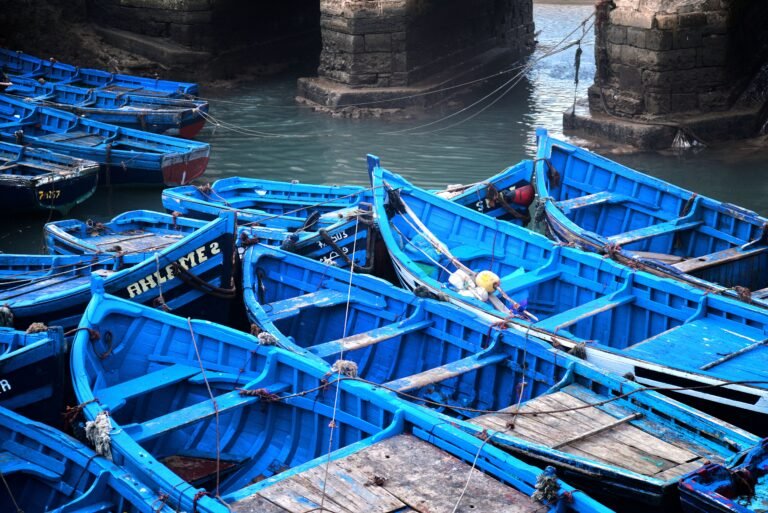
The working fishing port on the northern edge of the medina is one of the most visually compelling places in the city. Blue painted boats. Fishermen repairing nets. The smell of the sea and the catch. The morning activity of a working port that is genuinely working rather than performing for visitors. The fish market alongside the port where the morning’s catch is sold and can be immediately cooked to order at the adjacent grills.
5. Fresh Seafood at the Port Fish Market
The combination of choosing your fish or seafood from the market display and having it grilled on the spot with the basic Moroccan spicing of cumin, paprika, and fresh herbs is one of the most satisfying eating experiences in Morocco. The prawns are particularly extraordinary. Go hungry. Eat everything.
6. Horse Riding on the Beach
Several operators along the beach road offer horse riding on the long Atlantic beach. The combination of a horse, the open beach, the Atlantic wind, and the backdrop of Essaouira’s fortified walls visible to the north produces photographs that require no filter and an experience that is genuinely memorable.
7. Camel Ride at Sunset
A sunset camel ride along the beach is the more tourist-oriented activity but one that many visitors to Essaouira name as a highlight. The combination of the pace of a camel, the sunset light on the Atlantic, and the specific surreal quality of riding an ancient form of transport on a beach produces a specific kind of memory.
8. Surf Lesson
The Atlantic swells and the consistent wind make Essaouira a legitimate surfing destination rather than simply a scenic one. Multiple surf schools along the beach offer beginner lessons that provide a genuine introduction to the sport in conditions that are accessible for first-timers on the correct days.
9. Kitesurfing
The same winds that moderate Essaouira’s summer temperatures make it one of the most reliable kitesurfing destinations in Africa. The Moulay Bouzerktoun beach north of the city is the primary kitesurfing spot and the conditions during June to August are world-class.
10. Sunset Walk Along the Ramparts
The Skala du Port ramparts on the south side of the city provide a different but equally dramatic sunset viewing point from the Skala de la Ville. The view combines the working port, the fishing boats returning to harbour, and the Atlantic horizon turning colour as the sun descends.
11. Explore the Art Galleries
Essaouira has a disproportionate concentration of serious art galleries relative to its size, the legacy of a long history of attracting painters, sculptors, and musicians. The galleries along Rue Laâlouj and the surrounding medina streets contain work ranging from affordable prints to significant contemporary pieces.
12. The Local Souks
The souks of Essaouira, while significantly calmer than those of Marrakech or Fez, contain excellent examples of Moroccan craftwork. Thuya wood inlaid furniture and objects made from the distinctive local wood. Silver jewellery. Leather goods. Textiles. And the specific category of crafts that reflect the coastal character of the city.
13. The Jewish Quarter (Mellah)
The historic Jewish quarter of Essaouira reflects the city’s long history as a trading port where Jewish merchants played a central economic role. The architecture of the Mellah is distinct from the surrounding medina and the cemetery is one of the best-preserved Jewish historical sites in Morocco.
14. Walk the Ramparts
The full circuit of the Essaouira ramparts, which enclose the medina on the landward sides as the sea provides natural defence on the ocean side, provides both a historical walk and the elevated views across the city and the surrounding landscape that the ground level medina cannot offer.
15. Moroccan Cooking Class
Cooking classes in Essaouira combine a market visit for ingredients with a hands-on preparation session of traditional Moroccan dishes in a riad kitchen. The specific Essaouira version of Moroccan cuisine incorporates more Atlantic seafood than the inland versions and a cooking class here produces a slightly different result from the same experience in Marrakech.
16. Traditional Moroccan Hammam
A visit to a traditional neighbourhood hammam, the communal bathhouse that has been a fixture of Moroccan daily life for centuries, is one of the most culturally immersive experiences available in Essaouira. The combination of the steam room, the kessa scrub, and the black soap application produces a physical cleanliness and relaxation that has no Western equivalent. Some riads have private hammam facilities that provide the experience with more privacy.
17. Mint Tea Cafés
The ritual of Moroccan mint tea, poured from a height to create the froth that is considered essential to a properly made glass, is one of the most consistent pleasures of any time in Morocco. The rooftop cafés of the Essaouira medina that combine this ritual with Atlantic views create one of those specific moments of travel that is difficult to translate but impossible to forget.
18. Visit an Argan Oil Cooperative
The women’s cooperatives in the argan forest region surrounding Essaouira represent one of the most significant economic developments for Berber women in southern Morocco. A genuine cooperative visit, as opposed to a commercial shop using cooperative imagery without the underlying reality, provides context for the argan oil production process and supports the women who work within it. Your riad can recommend a reputable cooperative rather than a tourist-oriented production.
19. Day Trip to Sidi Kaouki
The beach village of Sidi Kaouki approximately 27 kilometres south of Essaouira is the destination for those who want even more wind, even more Atlantic, and even fewer people than Essaouira itself. A small but growing surf and kitesurfing community, a long wild beach, and a pace of life that makes Essaouira look busy. A half-day or full-day trip by taxi or private driver.
20. Photography Walk with a Local Guide
Essaouira’s blue and white streets, the port at dawn, the morning fish market, the argan cooperative workers, and the light on the medina walls at different times of day are all extraordinary photographic subjects. A guided photography walk with a local who knows the specific locations and the specific times produces photographs that an unguided visit might not.
21. Boutique Shopping in the Medina
The medina shops of Essaouira sell the specific crafts of the city alongside the more standard Moroccan souvenir range. Thuya wood objects inlaid with silver and other woods. The distinctive geometric Essaouira tiles. Local argan oil from reputable producers. Gnawa music recordings. Silk and cotton textiles in the blue and white palette of the city itself.
22. The Gnaoua and World Music Festival
The annual Gnaoua World Music Festival held every June in Essaouira is one of the most extraordinary music events in Africa and genuinely worth planning a trip around. The Gnawa musical tradition of Morocco, brought by enslaved West Africans over centuries and now a distinctive Moroccan spiritual and musical form, is celebrated alongside invited world music artists in free concerts across multiple stages in the medina and on the seafront.
23. Beach Picnic
A picnic assembled from the medina food stalls and the port fish market, carried to the quieter southern sections of the beach, and eaten watching the Atlantic horizon is one of the most perfect simple pleasures available in Morocco. Bread, olives, fresh fruit, a piece of grilled fish wrapped in paper, and the ocean.
24. Luxury Spa Day
Several of Essaouira’s boutique riads and the Sofitel Mogador offer spa facilities that combine Western wellness treatments with traditional Moroccan elements including argan oil body treatments, rose water therapies, and hammam sequences. A full spa day in this setting is a genuine indulgence that the Essaouira atmosphere makes particularly meaningful.
25. Rooftop Dining at Sunset
Multiple restaurants in the medina have rooftop terraces with views across the city’s blue and white roofscape to the Atlantic beyond. Dinner on a rooftop terrace as the sunset colours the whole scene is the most cinematically perfect way to spend an Essaouira evening.
Read related post: 25 Amazing Things to Do in Zanzibar (Solo Female Travel Guide)
Perfect 3-Day Essaouira Itinerary
Day 1: Medina, Port, and First Evening
Arrive in the morning and check into your riad. Allow yourself an hour after check-in to sit in the courtyard with a tea and feel the pace of the place before you do anything else. This hour is not wasted time. It is the transition from wherever you came from to where you have arrived.
After the settling in, walk the Skala de la Ville ramparts in the late morning when the light is still high enough to see the Atlantic clearly and before the midday heat. Descend from the ramparts into the medina proper and begin the unhurried exploration that Essaouira rewards over the rushed version. Lunch from the food stalls of the medina, a bowl of harira soup and fresh bread.
Afternoon at the port to watch the working life of the fishing harbour. Stay for the late afternoon fresh seafood grilling at the fish market stalls. Order the prawns. Eat them standing up with the Atlantic behind you.
Evening back in the medina. Find a rooftop café for mint tea as the sky turns. Dinner at a medina restaurant, the fish tagine is the correct order in Essaouira.
Day 2: Beach, Surf, Spa, and Sunset
Early morning walk along the beach before breakfast. The beach at dawn in Essaouira, the mist still over the Atlantic and the city walls visible to the north and the day not yet started, is one of those travel memories that arrives unexpectedly and stays.
Breakfast at your riad or at a medina café. Morning surf lesson with one of the beach schools. The Atlantic in this part of Morocco is cooler than the Mediterranean but the experience of a first surf lesson on this beach, in this wind, is genuinely extraordinary.
Post-surf lunch at a beachside café. Afternoon at a hammam or spa, your riad can arrange this and the timing after a morning in the Atlantic is perfect.
Late afternoon back to the Skala du Port ramparts for the sunset. The light on the working port, the fishing boats returning, the sky over the Atlantic turning from gold to orange to the specific dark blue of an Atlantic dusk. Stay until it is fully dark.
Dinner at a rooftop restaurant with the medina below you.
Day 3: Argan, Shopping, and Rooftop Departure
Morning visit to an argan oil cooperative outside the city. The drive through the argan landscape takes approximately 30 minutes each way and the visit to the cooperative, seeing the traditional stone grinding process and understanding the economic significance of what you are looking at, changes how you think about the argan oil products you will purchase.
Return to the medina for the morning shopping hours when the artisan workshops are at their most active. Thuya wood. Silver jewellery. The blue and white ceramics. Take time with the purchasing rather than rushing it.
Lunch at a medina café. Final mint tea on a rooftop. Then departure with the specific feeling of a place that gave you more than you expected and that you already know you will return to.
What to Pack for Essaouira
Comfortable sandals that can handle both the medina cobblestones and the beach without requiring a change. A leather sandal or a comfortable flat that works across both environments.
Linen clothing in neutral or light colours. The heat of the Moroccan sun combined with the Atlantic wind makes linen the single most appropriate fabric choice. Pack more layers than you expect to need because the wind creates significant temperature variance throughout the day.
A light jacket for evenings and particularly for the beach and ramparts where the Atlantic wind becomes genuinely cold once the sun goes down. Do not arrive without a layer.
Sunglasses that are genuinely windproof rather than stylish alternatives that will be removed by the Essaouira wind within five minutes of the beach.
A crossbody anti-theft bag for daily medina use. Keeps hands free, sits in front of you in crowded spaces, and removes the anxiety of managing a valuable in a market environment.
Sunscreen that you apply before leaving the riad every morning regardless of cloud cover. The Atlantic coast light is deceptively strong and the combination of sun and reflected ocean light produces burn faster than most visitors expect.
A power bank for all-day medina exploration without the anxiety of a draining phone battery.
A camera or phone with a good camera because Essaouira is one of the most consistently photogenic places in Morocco and the specific quality of the light, the blue and white architecture, the port, and the beach creates genuinely extraordinary photographs with very little effort.
Luxury Experiences Worth Splurging On
A boutique riad in the medina. L’Heure Bleue Palais is the most complete luxury riad experience in Essaouira with its swimming pool, fine dining, and the specific combination of traditional Moroccan architecture and contemporary comfort. Villa Maroc is more intimate and more deeply embedded in the medina atmosphere. Either represents money genuinely well spent.
A full hammam at a luxury riad. The private hammam experience at a boutique property, combining the traditional sequence of steam, black soap, kessa scrub, and argan oil application with the atmospheric setting of a beautifully designed riad hammam room, is fundamentally different from and significantly more comfortable than the neighbourhood hammam experience.
Rooftop dinner at the best restaurant in Essaouira. A long, unhurried dinner on a rooftop terrace with the medina below, Atlantic air above, and a menu that reflects the genuine best of Moroccan coastal cuisine is the premium dining experience that Essaouira offers and one that is priced significantly lower than an equivalent experience in a European destination.
A luxury spa day at the Sofitel Mogador. The Sofitel’s spa facilities are the most comprehensive in Essaouira and the combination of the hammam sequence, the argan oil body treatments, and the pool and relaxation facilities creates a full-day healing experience that the city’s atmosphere makes particularly meaningful.
A private surf lesson with one of the more established schools that offer private instruction as an alternative to group lessons. The Atlantic waves, a skilled instructor, and the specific pleasure of learning to surf in this wind and this light is worth the premium over a group session.
A photography tour with a local guide. Essaouira’s most extraordinary photographic subjects, the pre-dawn port, the morning fish market, the light on the ramparts at specific times, and the less-visited medina corners, are most accessible with someone who knows the city intimately.
Travel Tips
Currency: The Moroccan Dirham (MAD) is the local currency. One USD is approximately 10 MAD at standard exchange rates. Exchange money at the bank or at official bureaux de change rather than from street money changers.
Cash: Essaouira is substantially cash-based. Many riads, restaurants, and all market vendors operate in cash only. Bring sufficient dirhams from the ATM or exchange before your medina days. ATMs are available near the medina entrances.
Language: Arabic and Darija (Moroccan Arabic) are the primary languages. French is widely spoken in hotels, better restaurants, and by most people with any tourism industry contact. English is spoken by younger Moroccans and those in the tourism sector but is less universally available than in some other destinations.
WiFi: Most riads and hotels provide WiFi. Café connectivity is generally reliable in the main tourist areas. A Moroccan SIM card with data, available at the airport or in city phone shops, provides the most reliable connectivity for navigation and communication.
Tipping: Tipping is expected and appreciated across the Moroccan hospitality and service industries. Ten percent of a restaurant bill is appropriate. Round up taxi fares. Give guides and drivers a tip at the end of the engagement. Small amounts for anyone who provides a service is both culturally appropriate and economically meaningful.
Cultural etiquette: Dress modestly outside beach areas, particularly when visiting the medina, the port, and any religious sites. Shoulders and knees covered is the appropriate minimum. Do not photograph local people without asking permission first. Respect the call to prayer by moderating noise levels near mosques during prayer times.
Friday prayer times: The main Friday prayer between approximately 12:30 and 2pm sees many local businesses close temporarily. Plan your Friday lunch and early afternoon with this in mind.
Shopping tips: Bargaining is expected and is part of the shopping culture in Moroccan souks. Start at approximately half the first price offered and settle somewhere between that and the full price. Do not bargain aggressively for small amounts and do not begin bargaining unless you genuinely intend to buy.
Is Essaouira Safe?
Essaouira is generally considered one of the safer and more welcoming destinations in Morocco for solo female travelers and the reputation is consistently confirmed by those who visit.
Solo travelers move freely through the medina, the beach, and the port areas during the day and early evening without significant concern. The medina of Essaouira is notably less aggressive in terms of vendor approaches and unsolicited guide offers than some other Moroccan cities.
Women traveling alone report a significantly more relaxed experience in Essaouira than in Marrakech or Fez. The city’s artistic community, its international surf culture, and its long history as a cosmopolitan trading port have produced a generally open and welcoming attitude toward solo female visitors.
Walking at night in the main medina areas and along the lit beachfront road is manageable with standard nighttime awareness. Darker and quieter medina alleys late at night warrant the same caution you would apply anywhere. Use your riad as a reference point for what the staff consider comfortable walking at different hours.
Scams in Essaouira are less prevalent than in some Moroccan cities but present in the forms common to the country. Unsolicited “guides” who attach themselves to visitors and then request payment. Vendors who lead you to their shop under the pretence of showing you somewhere else. Maintain polite firmness and navigate independently.
Taxis should be taken from official petit taxi stands rather than from individuals who approach you offering rides. Agree on the price or confirm the meter is running.
Valuables managed with the standard travel awareness apply here as everywhere. Do not carry more cash than you need for the day. Use an anti-theft crossbody bag in crowded medina areas.
Dress code outside beach and resort areas means covering shoulders and knees as a baseline. In the beach areas swimwear is appropriate. Walking through the medina in a swimsuit or very revealing clothing draws unwanted attention and is disrespectful of the local cultural context.
Final Thoughts
Essaouira is not the Morocco you will often see on Instagram.
It is quieter. Gentler. It smells of the ocean and cumin and the specific wood smoke that drifts from kitchens in the medina at mealtimes. The cats that watch you from doorways are the same cats that have watched travelers from doorways in this same city for two hundred years and they have the specific self-possession of animals that understand their own territory completely.
I have been to Morocco several times now and there are aspects of the Marrakech experience, the Djemaa el-Fna at its most full and most alive, the architecture of the great mosques, the scale and the drama of a city that has been a significant place for a very long time, that are irreplaceable. Marrakech is extraordinary. I will always return to Marrakech.
But Essaouira gives something different. A pace at which travel becomes something other than the accumulation of experiences and begins to feel more like inhabiting a place. The wandering without a plan that produces the best memories. The tea on the rooftop that becomes two hours of watching the light change over the Atlantic and understanding in your body rather than your head that you are somewhere genuinely extraordinary.
Sometimes the best travel memories come from slowing down rather than rushing to the next attraction. Essaouira is where I learned that. In the specific, unhurried way that only this blue and white coastal city with its Atlantic wind and its centuries of history and its cats watching from doorways can teach it.
With love,
Nia
FAQ
Is Essaouira worth visiting?
Absolutely. Essaouira offers a more relaxed and more intimate atmosphere than many of Morocco’s larger cities, with a UNESCO-listed medina, extraordinary fresh seafood, beautiful Atlantic beaches, consistent surf conditions, a rich artistic culture, and the specific character of a coastal city that has been accumulating history and character for centuries. It is one of Morocco’s most genuinely rewarding destinations.
Is Essaouira safe for solo female travelers?
Yes. Essaouira is generally considered one of Morocco’s most welcoming and relaxed destinations for solo female travelers. The atmosphere is notably calmer than Marrakech in terms of vendor approaches and street attention. Standard travel awareness, modest dress in the medina, and the use of official taxis at night are the practical precautions that make the experience consistently comfortable.
What is Essaouira famous for?
Its UNESCO-listed medina and historic ramparts. The Atlantic coastline and consistent wind that make it one of the best kitesurfing destinations in Africa. Fresh seafood from the working fishing port. The blue and white architecture. The Gnawa musical tradition. The argan oil production of the surrounding region. The artistic community that has made it one of Morocco’s most creative cities.
Can you swim in Essaouira?
Yes, although the Atlantic Ocean off the Essaouira coast is cooler than Morocco’s Mediterranean coastline and the consistent wind can make some days better suited to watching the waves than swimming in them. The northern section of the beach nearest the medina walls is calmer and more suitable for swimming. The beach is most popular for surfing, kitesurfing, and beach walking.