
What to Wear Working From Home
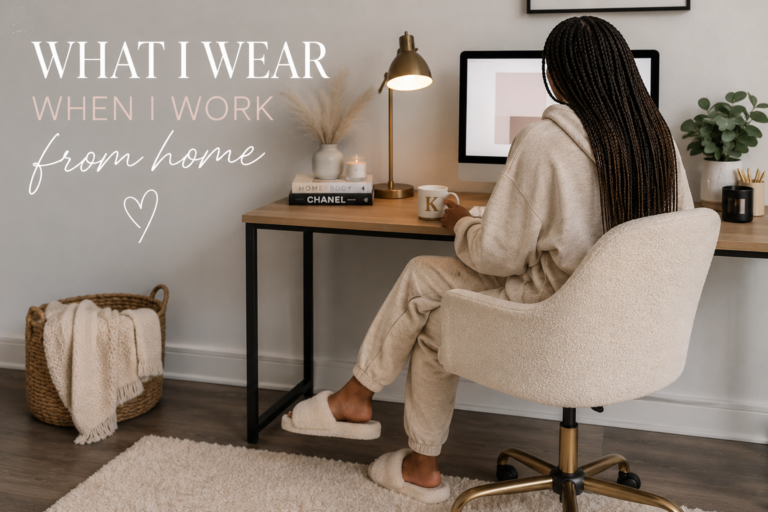
There is a version of working from home that looks like staying in yesterday’s pyjamas until 3pm, eating lunch over the keyboard, and realising at 6pm that you have not left the house or spoken to another human being since the previous evening.
I have lived that version. It is not as comfortable as it sounds and it is significantly less productive than the alternative.
What's In This Post
ToggleWhat you wear when you work from home matters more than the casualness of the environment suggests it should. Not because anyone is watching, but because the act of getting dressed, of choosing what you put on your body with some intention, signals to your brain that the day has started and that you are showing up for it rather than sliding through it.
I run multiple blogs, manage a team, and create content from home most days of the week. What I wear has become part of how I set the tone for the day rather than an afterthought I deal with when a video call forces the issue.
Here is everything I have figured out about dressing for the work from home life in a way that feels both comfortable and considered.
Read related blog: The Hard Truth About Online Income. It Is Not As Glamorous As Social Media Makes It Look
Does What You Wear Actually Affect Your Productivity?
This question sounds like something designed to sell you more clothes. The research behind it is more interesting than the marketing.
The Psychology of Getting Dressed
The concept most often referenced in this conversation is enclothed cognition, a term from a 2012 study that found that the symbolic meaning of clothing and the physical experience of wearing it combine to influence the wearer’s psychological state and performance.
In plain language: what you put on your body changes how you think. Not dramatically and not magically, but measurably. Clothing that you associate with focus, competence, and professional intention tends to produce more of those qualities than clothing you associate with rest, sleep, and the absence of obligation.
This does not mean you need a blazer to write a blog post. It means the choice matters and making it with some intention produces better outcomes than making no choice at all.
Why Staying in Pyjamas Does Not Always Work
Pyjamas and sleepwear are associated in the brain with rest, sleep, and the off hours. Wearing them during work hours sends a mixed signal to the brain about what this time is for.
The problem is not comfort. Comfort is genuinely important and the goal is not to recreate corporate office dressing at home. The problem is the specific association. A comfortable outfit chosen for the day communicates something different from nightwear that was simply never changed. The physical comfort can be identical. The psychological effect is not.
Read related post: 25 Side Hustles For Women That Actually MakeMoney In 2026
My Everyday Work From Home Outfit Formula
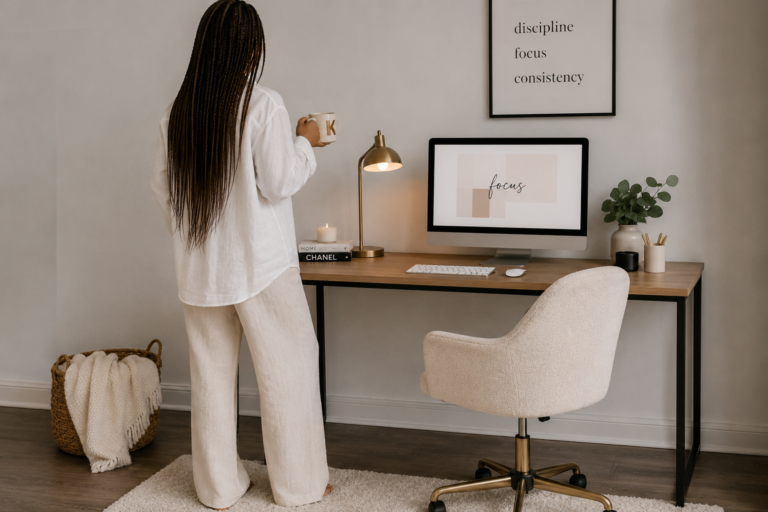
My work from home wardrobe is built around a small number of pieces that are genuinely comfortable, look intentional rather than accidental, and can move from a working morning to a video call to an afternoon school run without requiring a change.
Comfortable Knit Tops
A soft knit top in a neutral shade is my most reached-for work from home piece. It is comfortable in a way that a structured shirt is not, looks more considered than a basic t-shirt, and photographs well enough on a video call that I am not self-conscious about my camera being on.
The key is choosing knits that have some structure rather than the most oversized, shapeless version. A knit that fits the shoulders well and has a clean neckline reads as intentional. A shapeless, stretched-out knit reads as the version of dressing that happens when getting dressed is not quite a priority.
Relaxed Linen Shirts
Linen earns its place in the work from home wardrobe specifically because of how it handles temperature. It breathes genuinely well, which matters when you are sitting at a desk for hours without the temperature regulation of a larger office building. It also wrinkles in a way that looks intentional rather than accidental, which is a specific quality that makes it very forgiving for long working days.
An oversized linen shirt in white, cream, or warm beige works as a top on its own or as a layer over a simple fitted t-shirt for the cooler months.
Soft Wide-Leg Trousers
Wide-leg trousers in a soft fabric, viscose, tencel, or a ponte knit, are the most significant upgrade available from the home-office-to-pyjama pipeline. They are as comfortable as loungewear with the visual effect of being dressed.
The waistband is the detail that matters most. An elasticated waistband in a wide-leg trouser produces all-day comfort without any of the waistband pressure that structured trousers create after hours of desk sitting. Look for a structured but soft waistband rather than a fully elasticated pull-on.
Neutral Lounge Sets
A well-chosen lounge set, matching top and bottom in a soft fabric with clean lines, is the work from home outfit for days when the morning is already full and making multiple clothing decisions is not what the day needs.
The distinction between a lounge set that works for a work day and one that reads as pyjamas is in the fabric and the cut. A lounge set in a structured modal or a textured knit with a clean silhouette looks like a deliberate outfit. A matching set in a thin, shiny fabric with loose elastic at the ankle reads as nightwear regardless of the colour.
Lightweight Cardigans
A lightweight cardigan over almost any combination of the pieces above immediately adds a layer of visual intention that makes the whole outfit look more considered. It also solves the temperature fluctuation problem of a home working environment where you control the thermostat and it still somehow manages to be both too warm and too cold at different points in the same afternoon.
Comfortable Outfits for Different Types of Workdays
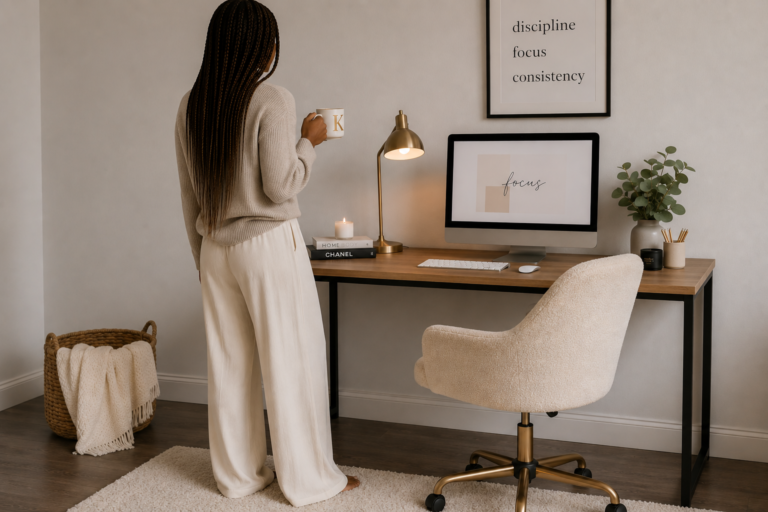
Not every working day looks the same and the outfit can reflect that without requiring a significant wardrobe or a complicated decision-making process.
Writing and Blogging Days
The most comfortable outfit is the right outfit for a day that is entirely focused and internal. A soft knit or linen top, wide-leg trousers, a cardigan if the morning is cool. No jewellery required. Hair in whatever is comfortable. The goal is to be comfortable enough that the body is not a distraction from the thinking.
Read related post: How to Start a Blog in 2026: A Complete Guide for Women Ready to Share Their Voice, Build Their Brand, and Create New Opportunities
Video Call Days
The camera sees the top third of you on most video platforms. A clean, well-fitted top in a solid colour or simple pattern is all the outfit planning a video call day requires. I keep two or three specific tops that I know photograph well in my rotation specifically for this. The bottom half can be whatever is most comfortable because it is genuinely irrelevant for most calls.
Admin and Planning Day
Admin days, the days of emails and scheduling and the organisational work that keeps everything running, benefit from an outfit that feels settled and focused rather than either overly formal or overly casual. A lounge set or a simple knit top with wide-leg trousers covers this perfectly.
Read related post: How I Plan One Month of Blog Content in a Single Afternoon
Creative Content Days
Content creation days where photography, filming, or any visual content is being produced require an actual considered outfit because you may be in the frame. I keep a small collection of pieces specifically for content days that photograph well, are comfortable to move in, and look good in the colour palette I use for HerDailySpace visuals.
Read related post: How To Become A Content Creator In 2026 Even With No Experience
Fabrics That Keep You Comfortable All Day at a Desk
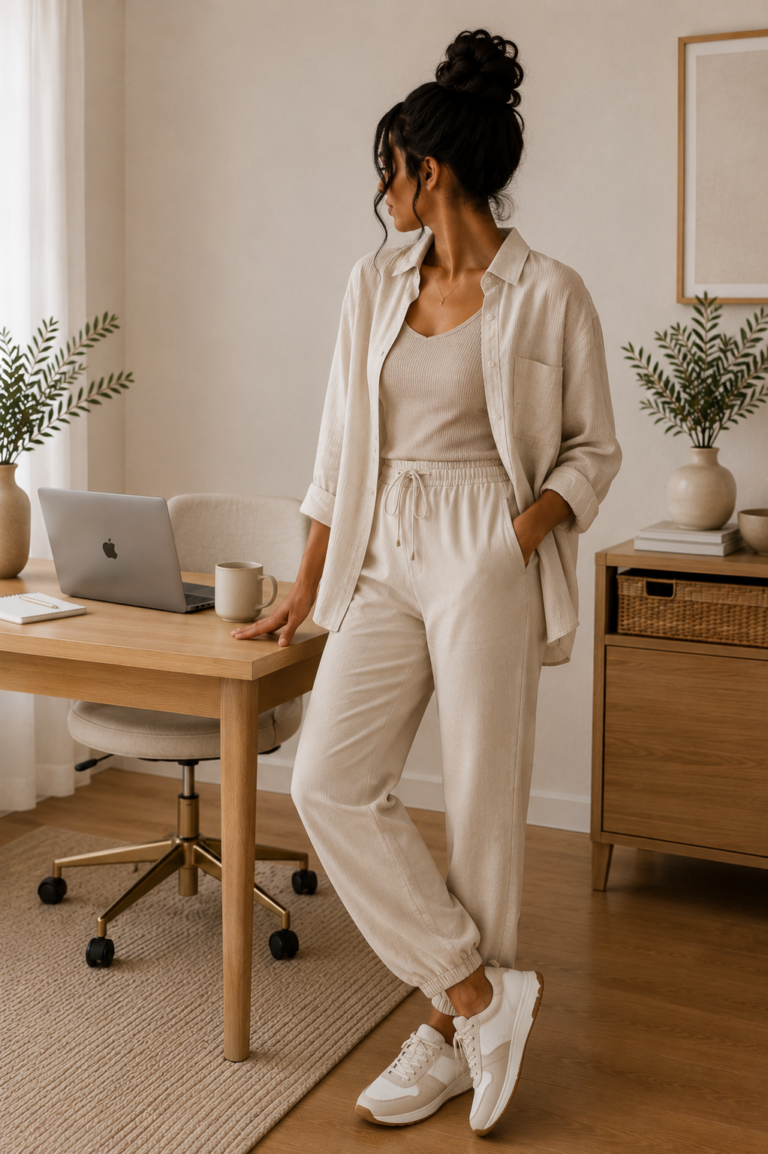
Cotton is the most breathable natural fibre and the most widely available. It washes well, ages well, and is genuinely comfortable for long desk days. The limitation is that it wrinkles more visibly than some other options.
Linen is more breathable than cotton and has a texture and drape that looks intentional even at its most relaxed. It wrinkles in a character-adding rather than care-neglecting way. Best in warmer months or for those who run warm generally.
Bamboo is increasingly available and genuinely impressive in its softness and breathability. Bamboo fabric has natural temperature-regulating properties that make it comfortable across a wider temperature range than cotton. It is softer against the skin than most synthetic alternatives.
Modal is a semi-synthetic fabric derived from beech trees that has a specific drape and softness that makes it ideal for loungewear and work from home clothing. It holds colour well, does not pill quickly, and feels genuinely luxurious at accessible price points.
Soft knitwear in merino or a merino blend is the temperature-regulating option for cooler climates or cooler months. Merino specifically wicks moisture, resists odour, and maintains its appearance through long wearing without needing daily washing.
Colours That Help Me Feel Calm and Focused
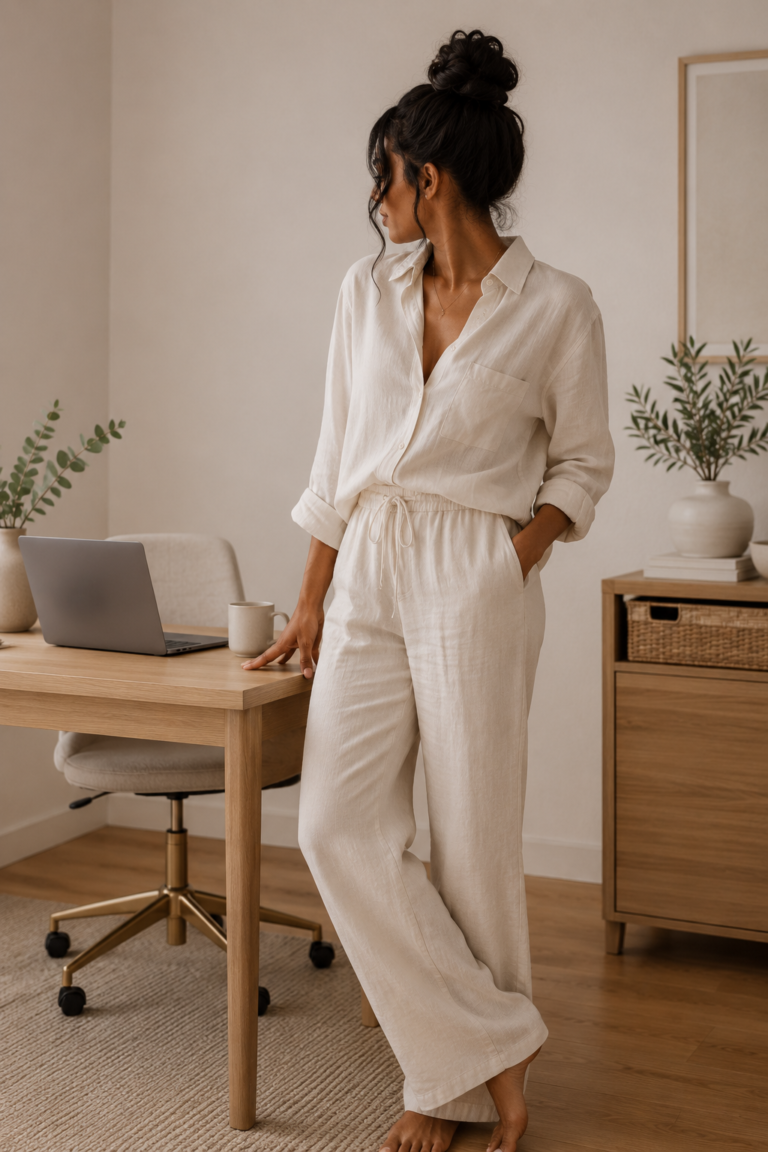
My work from home wardrobe runs almost entirely in neutrals and I have found this to be genuinely useful rather than simply a stylistic preference.
Cream and off-white are the warmest and most flattering neutrals for a range of skin tones and produce a clean, intentional aesthetic that photographs well for content.
Taupe and warm beige sit between nude and grey in a way that is grounded and calm. They work with almost everything else in a neutral wardrobe and have a quiet sophistication that feels appropriate for a working environment without being corporate.
Soft olive is the most versatile non-neutral in my working wardrobe. It photographs as a neutral in most lighting, works with warm and cool adjacent tones, and has an earthy quality that feels intentional rather than bland.
White is the most clean and focused colour in the working wardrobe and the one I reach for when I want the environment around me to feel like the most prominent thing rather than what I am wearing.
Shoes I Wear While Working From Home
Supportive house slippers that actually support the foot rather than the flat, backless version that offers no arch support are worth the investment for anyone spending multiple hours on their feet in a home working environment. The lower back and joint impact of genuinely unsupportive footwear across a full working day is cumulative.
Slides with some structure are my in-between option for days when I am moving between the desk and other parts of the house regularly.
Barefoot works for parts of the day on warm flooring but genuinely prolonged periods of standing or walking without any foot support is worth monitoring, particularly if you have any existing lower back or joint issues.
Supportive trainers on days that include any outdoor movement, even a midday walk, because the transition from desk to outdoor movement and back is easier when the footwear does not need to change.
Simple Accessories That Make Me Feel Put Together
Minimal jewellery makes a significant difference to how a simple outfit reads on a video call and in content photography. A pair of small earrings and a simple necklace or a single layered chain is all that is needed to lift a plain knit top from basic to considered.
A simple watch does two things simultaneously. It marks the time in a way that is less disruptive than checking a phone and it adds a specific kind of polished intention to a casual outfit that no other accessory quite replicates.
Hair clips and accessories that keep hair neat without requiring a full styling session. A claw clip, a simple scrunchie in a tone that works with the wardrobe palette, or a headband are the difference between hair that looks intentional and hair that looks like it happened.
Light makeup on days when it adds to how focused and present I feel. Not as a requirement but as an option that is available and that sometimes makes a genuine difference to how the day starts.
Mistakes I Stopped Making
Working in pyjamas all day. The physical comfort of staying in sleepwear is not worth the psychological cost of the boundary between rest and work becoming genuinely unclear.
Uncomfortable jeans. Structured denim waistbands after three hours of sitting at a desk are a distraction from the work. The soft trouser options available now produce the same visual effect without any of the discomfort.
Too many layers that required management throughout the day. The outfit should be manageable without conscious attention once it is on. If you are pulling at sleeves, adjusting layers, or conscious of what you are wearing more than twice in a day, the outfit is working against the work.
Ignoring posture and its relationship to what I was wearing. Certain fabrics and fits subtly encourage better or worse posture. A top that sits well at the shoulders and a trouser with a comfortable but supportive waistband contribute to better sitting posture throughout a long working day.
FAQ
What should I wear when working from home?
The most effective work from home outfit is one that is comfortable enough to wear for a full day at a desk without physical distraction and intentional enough that your brain associates it with work rather than rest. In practice this means soft but structured fabrics, comfortable but non-pyjama silhouettes, and a getting-dressed habit that marks the start of the work day even when no one else will see you.
Should you get dressed every day when working remotely?
Yes, and the research on enclothed cognition supports this practically rather than just stylistically. Getting dressed does not mean dressing formally or uncomfortably. It means making an intentional clothing choice that signals to yourself that the working day has begun. The specific outfit is far less important than the habit of choosing one.
Are lounge sets good for working from home?
A well-chosen lounge set in a structured fabric with clean lines is genuinely one of the best work from home outfit choices available. The key is choosing sets that look like a deliberate outfit rather than nightwear, which comes down to fabric quality, structure, and silhouette rather than simply the category of clothing.
What fabrics are best for working from home?
Cotton, linen, bamboo, modal, and soft merino knitwear are the fabrics that combine comfort for all-day desk wear with the appearance of an intentional outfit. Avoid very thin, shiny, or heavily elasticated fabrics that read as loungewear or nightwear regardless of the colour or cut.
How do I look professional on video calls while staying comfortable?
The camera sees the top third of you on most video platforms. A clean, well-fitted top in a solid colour or simple pattern in a fabric that looks intentional rather than oversized is all you need for the upper body. Simple earrings and a tidy hairline or style complete the video call look without requiring a full outfit change from whatever you are wearing on the bottom half.