
How to Return to God When You Feel Far Away
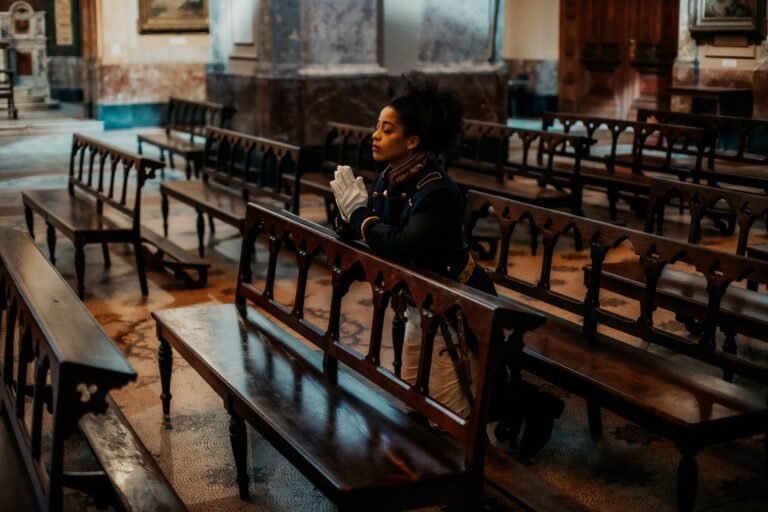
I am not writing this from the other side.
I want to be clear about that before anything else because I think the most useful version of this particular piece of writing is the honest one. Not the version where I tell you I found my way back to God and here is the step-by-step guide. The version where I tell you I am still finding it and here is what the searching actually looks like from the inside.
What's In This Post
ToggleI am thirty-five. I am in the middle of the most significant season of healing and becoming I have ever experienced. And somewhere in the middle of all of it I have started to feel a pull toward something I stepped away from years ago.
God.
Not in a dramatic way. Not in the way of a crisis that forced a reckoning or a Sunday morning that suddenly felt impossible to miss. In the quiet, persistent way that a question you have been avoiding keeps returning. In the way something you thought you had resolved keeps sitting in a corner of your awareness asking whether you are done with it or whether you just stopped looking at it.
I thought I was done with it. I am not sure I was.
This is not the article of someone who has returned. It is the article of someone who is trying to find the way back and telling you honestly what the path looks like from the middle of it rather than from the destination.
If you are somewhere similar, I hope something here makes you feel less alone in it.
How to Come Back to God After Falling Away
I want to start by saying something about what falling away actually looks like because I think it is often less dramatic than we expect it to be and therefore easier to minimise.
For me it was not a single decision. It was not a moment where I consciously chose to walk away from faith. It was a slow drift that happened through years of circumstances that made faith feel either less accessible or less urgent.
The season of survival that did not leave space for anything that was not immediately necessary. The relationship that was not built around faith and whose eventual ending took a great deal of me with it. The questions that arrived about things I thought I believed that I could not satisfactorily answer and that felt safer to set aside than to sit with honestly.
The church community I had belonged to that I drifted out of and never drifted back into.
Not a dramatic exit. A gradual absence that became the new normal so slowly that I did not notice how far I had moved until I turned around and could not see where I had started.
What I am learning now, tentatively and imperfectly, is that you do not have to have everything figured out before you begin turning back.
I had been waiting to feel ready. Waiting until I understood what I believed clearly enough that returning would feel coherent. Waiting until the questions were answered and the doubts were resolved and the theological positions were sorted.
I have started to suspect that the waiting for readiness is its own form of avoidance. That the return is not something that happens after you figure everything out but something that happens in the middle of the figuring, alongside the questions rather than only after they are answered.
You do not have to perform your way back to God. You can return honestly. With all of the uncertainty and the complicated feelings and the not-quite-knowing exactly what you believe right now.
From everything I am slowly remembering about this, that honest return is acceptable. More than acceptable.
How Do I Return to God? What I Am Actually Trying
These are not instructions from someone who has completed the journey. They are the things I am trying and finding, with varying degrees of difficulty and varying degrees of usefulness.
1. Start talking to God again even when it feels strange
This was the first thing and the hardest thing simultaneously.
Prayer felt unfamiliar in the way that a language you once spoke fluently feels when you have not used it in years. The words were there in some form but the ease was not. The naturalness was not.
I started small. Not with structured prayer. With the kind of honest, barely-formed conversation you might have with someone you have not spoken to in a long time and with whom the relationship is complicated and where you are not entirely sure how to begin.
Something like: I do not know how to do this anymore. But I am here. And I think I want to find my way back. I am not sure what that looks like. But I wanted you to know I am trying.
It felt inadequate. I am starting to think adequacy was never the point.
2. Pray honestly rather than performing prayer
Connected to the above but worth saying separately.
The version of prayer that felt most available to me in the early stages of this returning was not the eloquent version. It was not the version that sounded like faith. It was the version that sounded like confusion and longing and the specific mixture of wanting God to be real and being afraid of what it means if God is real.
I am praying that version. The one that is honest rather than polished. And something about that honesty feels more like genuine contact than the performed version ever did.
3. Open the Bible even when you do not know where to start
I am going to be truthful: this has been difficult.
There are parts of the Bible I do not know how to hold right now. Passages I have complicated feelings about. Theological questions that opening the Bible activates rather than resolves.
What I have found is that the Psalms have been the most accessible entry point for this particular season. Not because they provide answers but because they are full of the kind of honest, complicated, sometimes anguished conversation with God that makes the person in them feel like a genuine person rather than a spiritual performance.
Psalm 22 begins with my God my God why have you forsaken me. That is not a tidied-up faith. That is someone in genuine distress speaking honestly into the silence.
I have found it easier to return to a God who is present in those kinds of honest cries than to perform my way back to a sanitised version of faith that does not have room for where I actually am.
4. Confess what needs to be confessed
I am being careful about how I write this section because I do not want it to become a performance of religious correctness.
What I mean is this. There are things I am carrying that I need to put down. Not in a self-punishment way. In the way of acknowledging honestly to God the things that have created distance between us and releasing them rather than continuing to carry them silently.
Some of this is about specific choices. Some of it is about years of simply being absent when I could have been present. Some of it is about the ways I have tried to manage my life entirely alone without leaving any room for the possibility of something bigger than me being involved in it.
I am doing this imperfectly. But I am doing it.
5. Spend time with God consistently even when it feels dry
This is the one I find most difficult because the expectation I bring is that consistency should produce a felt sense of closeness. And consistency is not always producing that for me right now.
Some mornings I sit with the Bible and the prayer and feel nothing noticeably different. And I am learning, slowly, that the feeling of closeness to God is not the same as the reality of it. That spiritual growth often happens in the seasons that feel dry rather than in spite of them.
I am choosing to keep showing up even when showing up does not feel like it is producing anything. That is the best I have right now.
6. Find your way back to Christian community
This one is still ahead of me more than it is currently happening.
The thought of walking back into a church as the person I am now, with everything I am carrying and everything I am still questioning, is genuinely daunting. Not because I think I will be unwelcome. Because I do not quite know how to be there yet.
What I am doing instead is looking for smaller entry points. Conversations with one or two people who share my faith. The podcast that someone recommended that does not feel like a performance of certainty I cannot match. Community in forms I can access before I am ready for the form I used to know.
I am not there yet. But I am aware that returning to God alone, without any form of community, is probably not the most sustainable version of this return.
What If I Feel Too Far Away From God?
This is the feeling that kept me away for longer than anything else.
The sense that I had moved so far that the distance was now too great. That I had changed too much. That my questions were too complicated. That my absence had been too long.
There is something important I am learning about the difference between feeling far from God and actually being abandoned by God.
Feeling far from God is a real experience. I am not diminishing it. It is present and significant and it has texture and weight that is worth acknowledging honestly.
But the feeling of distance is not necessarily the same as the reality of distance.
The parable I keep returning to is the prodigal son. Not because it resolves all of my theological questions. Because the image of the father running toward the returning son rather than waiting to be approached, rather than requiring the performance of sufficient contrition before the welcome was extended, is the image that has the most personal traction for me right now.
The return is welcomed before it is completed.
I am holding that.
Shame is one of the biggest barriers to returning
Shame tells you that you have to earn your way back. That the distance you have put between yourself and God requires a corresponding amount of penance or improvement or correctness before return is possible.
I am learning, imperfectly, that this is not how grace works.
Grace, the version I am slowly and tentatively reacquainting myself with, does not require you to earn the return. It requires you to turn.
The turning is the beginning. Not the conclusion of a process that has to happen before the turning is acceptable.
Guilt has a useful version and a damaging one
The version of guilt that says I have done something I need to address honestly and change is useful. It moves you toward something.
The version of guilt that sits on you without moving you anywhere, that simply makes you feel bad about yourself without creating any forward motion, is not useful. It keeps you outside the door rather than helping you open it.
I am trying to pay attention to which version I am carrying on any given day and to release the one that is only weight without direction.
Bible Verses About Returning to God
I am being selective here rather than comprehensive because I think a long list of verses would not serve what this article is actually for. These are the ones that have personally meant something in this season.
James 4:8 — Draw near to God and he will draw near to you.
This one matters to me because it makes the first move mine. I do not have to wait until God feels close before I begin moving toward God. The movement toward is itself what initiates the closeness.
Lamentations 3:22-23 — Because of the Lord’s great love we are not consumed, for his compassions never fail. They are new every morning.
New every morning. Not contingent on what the previous morning looked like. Not earned by yesterday’s faithfulness. New.
That is a version of grace that I can receive on the days when yesterday does not feel like a good argument for today’s return.
Jeremiah 29:13 — You will seek me and find me when you seek me with all your heart.
Seeking with all your heart does not mean seeking with a perfect heart. It means seeking genuinely. The seeking I am doing right now is genuine even if it is messy and uncertain and full of questions I cannot answer.
Luke 15:20 — But while he was still a long way off, his father saw him and was filled with compassion for him; he ran to his son, threw his arms around him and kissed him.
Still a long way off. Still approaching. Not yet arrived. The welcome came before the arrival.
I am still a long way off. I am holding the welcome as real regardless.
How to Get Closer to God Again: What I Am Trying
Prayer. Imperfect, honest, sometimes barely articulate prayer. Daily where I can manage it. Whenever I can where daily is not available.
Reading Scripture. Starting with the Psalms. Moving slowly. Not trying to cover ground but to stay with what I am reading long enough for it to mean something.
Worship. Music specifically. There are songs from my earlier years of faith that I have started listening to again. Some of them produce something that feels like memory and something that feels like longing simultaneously. I am staying with that feeling rather than moving away from it.
Journaling. This one I was already doing. What has changed is that some of my journaling has become explicitly addressed to God. Which is another way of saying some of my journaling has become prayer.
Quiet time. I am genuinely bad at this. The silence that contemplative faith requires does not come naturally to me. But I am trying to create small pockets of it. Five minutes before the day fully begins. The drive to school without the radio. Small moments of deliberate quiet rather than the ambient noise that fills most of my hours.
Community. As mentioned above. Still in progress. Still finding the form it will take.
Making space in ordinary days. This is the one I think matters most and that I am least good at. The invitation to God into the normal parts of the day rather than only the set-aside devotional moments. The acknowledgement that the ordinary commute and the ordinary Tuesday and the ordinary difficult conversation are all places where the divine is potentially present if I am paying attention.
I am practising paying attention. I am not there yet.
What If You Are Turning to God in a Difficult Season
I want to address this carefully.
Many people come back to God during the hardest seasons of their lives. Not out of desperation as a last resort but because the hard seasons reduce something. Some of the noise. Some of the pretense. Some of the certainty that we are managing fine alone.
I am in a hard season in some ways. The healing work, the building, the single motherhood, the becoming. All of it requires more than I sometimes feel I have.
And turning toward God in this season does not feel like crisis faith to me. It feels like the hard season is doing what hard seasons sometimes do. Stripping away the layers of busyness and self-sufficiency that made it easy to live without this conversation.
I want to be clear about something important. Faith and professional support for mental health are not mutually exclusive. If you are in a genuinely difficult mental health season, turning toward God is valuable and meaningful and also talking to a therapist or doctor or other professional is also valuable and meaningful. You do not have to choose between them.
God and the therapist. Both. At the same time. That is where I am.
What I Am Learning About Finding My Way Back to God
I thought returning to God would feel like returning to something I had already fully understood and simply stopped practising. Like returning to a language I once knew.
It feels less like that and more like returning to something I understood partially and am now understanding differently. The faith I had in my early twenties was real but it was also simpler than the faith the life I have lived since then is asking me to carry.
The questions I have now are more complicated. The theology is more contested in my own mind. The certainty I had then is not available in the same form.
What I am finding is that the return does not require me to recover the simpler faith. It is asking me to find a faith that is large enough to hold the complicated version of who I am now. The questions and the doubts and the grief and the longing and the building and the becoming.
I am not sure what that faith looks like yet. I am in the process of finding out.
What I know is that the pull is real. The longing is real. The sense that something important is missing from a life that is in many other respects more whole than it has ever been is real.
And I am following the pull rather than waiting until I understand where it is leading before I begin.
A Simple Prayer for Coming Back to God
I am offering this not as a formula but as something you could genuinely say if you do not know what else to say.
God,
I do not know exactly how to do this. I am not sure what I believe about everything. I have questions I cannot answer and doubts I have been carrying longer than I can remember.
But I am here. And I think I want to find my way back to you.
I am bringing all of it. The mess and the questions and the years of distance and the guilt I have been carrying. I am not performing my way back. I am just turning.
If you are there, I am listening. I am trying to make room.
Amen.
You Can Come Back to God
You do not have to have the theology sorted. You do not have to have the questions answered. You do not have to feel ready or worthy or spiritually prepared.
You can turn toward God with the exact version of yourself you currently are. The uncertain version. The guilty version. The version who has been away for a long time and is not entirely sure of the welcome.
You can begin before you are ready.
The beginning is the beginning. Not the conclusion of a preparation process that must happen first.
I am beginning. Still in the middle of the beginning. Still not arrived at the destination.
But the beginning is real and it is happening and I am finding, slowly, that something is meeting me in it.
With love,
Nia
FAQ
How do I return to God after falling away?
Start with honesty rather than with performance. You do not have to have everything figured out or every question answered before you begin turning back. Start talking to God again, even imperfectly. Open Scripture, even for a few minutes. Acknowledge the distance rather than pretending it does not exist. The return happens in steps that do not all have to happen simultaneously or in perfect sequence.
Can I come back to God after years away?
Yes. The experience of feeling far from God after a long absence is real and it does not mean the return is not possible. The feeling of distance and the reality of separation are not always the same thing. The first movement toward returning, however tentative, is the beginning of the return.
What does the Bible say about returning to God?
Several passages speak directly to returning to God. James 4:8 says draw near to God and he will draw near to you. The parable of the prodigal son in Luke 15 describes the father running toward the returning son while he was still a long way off. Lamentations 3:22-23 speaks of compassions that are new every morning. Jeremiah 29:13 speaks of being found when you seek with your whole heart.
How do I get closer to God again?
Prayer, even imperfect and uncertain prayer. Reading Scripture, starting wherever feels most accessible. Worship in whatever form is available. Journaling that is honest about where you are. Creating quiet space in ordinary days. Finding some form of Christian community even if it is small or informal initially.
What should I do when I feel far from God?
Acknowledge the feeling honestly rather than performing a closeness that is not present. Begin moving toward God with what you have rather than waiting until you have more. The feeling of distance is real and it is also not necessarily the final word on the actual state of the relationship.